Japanese knives reward precision, but their harder steels and thinner edges need a sharpener that offers control without removing unnecessary metal. The right choice depends on your experience, preferred sharpening speed, and whether you want maximum edge customization or a simpler guided process.
This roundup compares 10 options, including dual-grit whetstones, rolling sharpeners, ceramic systems, and complete kits, so you can match your sharpening method to your knives and routine.
Best 10 Knife Sharpener for Japanese Knives Picks for 2026
Best Beginner Whetstone
Sharp Pebble 1000/6000 Grit Stone

- Dual 1000/6000 grit design
- Angle guide for easier learning
- Includes bamboo base and instructions
Best For: Home cooks learning water-stone sharpening
Best Compact Sharpener
Kai Seki Magoroku Diamond and Ceramic Sharpener

- Three diamond and ceramic stages
- No manual angle adjustment
- Compact Japanese-made design
Best For: Double-edged knives and small kitchens
Best Complete Stone Kit
400/1000 and 3000/8000 Whetstone Set

- Four grits from 400 to 8000
- Includes flattening stone and leather strop
- Angle guide and non-slip base included
Best For: Sharpening enthusiasts seeking a full progression
Best Adjustable V-Sharpener
ZWILLING V-Edge Professional Sharpener

- Adapters for Japanese and German angles
- Coarse and fine ceramic rods
- Guided V-edge sharpening design
Best For: Households with mixed Japanese and German knives
Best for Easy Setup
Sharp Pebble 1000/6000 Grit Kit

- Built-in 15°–22° angle guides
- Dual grits for repair and polishing
- Stable, water-only sharpening setup
Best For: Beginners maintaining Japanese and German-style kitchen knives
Best Guided Roller
AIERLIAN Diamond and Ceramic Sharpener
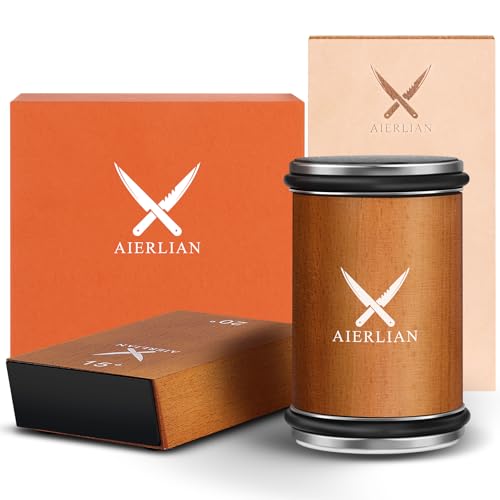
- Magnetic 15° and 20° angle support
- Diamond and ceramic sharpening discs
- Leather strop for burr removal
Best For: Cooks who want controlled rolling-angle sharpening
Best Japanese-Style Stone
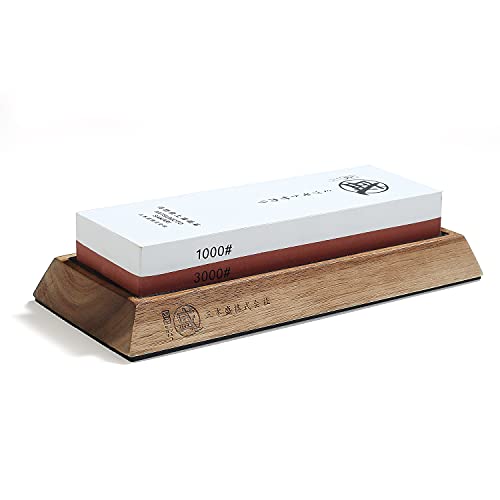
- Dual-sided 1000/3000 grit surface
- Non-slip bamboo base for stability
- Water-only sharpening with uniform corundum
Best For: Home cooks maintaining everyday kitchen knives traditionally
Best Guided Pick
Rolling Sharpener for Japanese Knives

- Preset 15° and 20° magnetic guides
- 400-grit diamond and 3000-grit ceramic discs
- Wood base, magnets, and replaceable discs
Best For: Beginners seeking controlled, low-fuss sharpening
Best Full-Grit Set
4-Side Whetstone Sharpening Kit

- 400/1000 and 3000/8000 grit sides
- Includes base, holder, strop, and angle guide
- Uses water instead of grinding oil
Best For: Users wanting repair-to-polish sharpening control
Best Complete Kit

- 400/1000 and 3000/8000 dual-grit stones
- Includes flattening stone, strop, base, and guide
- Works with Japanese and many other blades
Best For: Home cooks wanting a comprehensive sharpening setup
Best Beginner Whetstone – Sharp Pebble 1000/6000 Grit Stone
If you want a traditional knife sharpener for Japanese knives but are new to whetstones, the Sharp Pebble combines two useful grits with an angle guide. It uses water rather than oil and includes a bamboo base for a more controlled setup.
Best For: Home cooks who want guided, hands-on sharpening for everyday kitchen knives.
Pros:
- 1000 grit handles dull or damaged edges, while 6000 grit polishes them.
- Included angle guide helps beginners maintain blade positioning.
- Includes a non-slip bamboo base, instructions, and sharpening support materials.
- Water-based sharpening avoids the need for honing oil.
Cons:
- A whetstone requires more technique and preparation than a pull-through sharpener.
- The two-grit range may not be enough for heavily damaged blades that need a much coarser stone.
This is a practical entry point for Japanese-style knife maintenance, especially if you want polishing control and do not mind spending time learning the process.
Best Compact Sharpener – Kai Seki Magoroku Diamond and Ceramic Sharpener
The Kai Seki Magoroku is a compact knife sharpener for Japanese knives designed for quick maintenance without manually setting the sharpening angle. Its diamond and ceramic stages are housed in a small unit that stores easily in a drawer.
Best For: Owners of double-edged kitchen knives who want a compact, low-fuss sharpener.
Pros:
- Uses three sharpening stages, including two diamond types and a ceramic stage.
- Does not require you to adjust the angle yourself.
- Compact 5.6-inch design weighs about 3.6 ounces for easy storage.
- Made in Japan according to the supplied product details.
Cons:
- It is specified for double-edged knives, so it is not the natural choice for single-bevel Japanese blades.
- It offers less manual control than a traditional whetstone.
Choose this model when convenience and storage size matter more than the detailed edge control of a freehand stone. Confirm that your knife is double-edged before using it.
Best Complete Stone Kit – 400/1000 and 3000/8000 Whetstone Set
For broad sharpening and polishing work, this knife sharpener for Japanese knives is a full water-stone kit with four grits, a flattening stone, angle guide, and leather strop. It covers basic edge repair through fine polishing, though it requires soaking and more setup than a compact sharpener.
Best For: Enthusiasts who want one kit for repair, sharpening, polishing, and finishing.
Pros:
- 400/1000 and 3000/8000 grits cover coarse repair through fine polishing.
- Includes an angle guide, non-slip base, flattening stone, and leather strop.
- Uses water instead of expensive sharpening oil.
- Works with kitchen knives, pocket knives, scissors, chisels, and other blades.
Cons:
- Stones need to be soaked in water for 5–10 minutes before use.
- The larger kit involves more setup, cleaning, and storage than a simple sharpener.
- Using multiple grits and a strop requires learning which stage suits the blade.
This is the most versatile option in the group for users who want to progress beyond routine touch-ups. Its extra accessories add capability but also make it less convenient for quick sharpening.
Best Adjustable V-Sharpener – ZWILLING V-Edge Professional Sharpener
The ZWILLING V-Edge is a convenient knife sharpener for Japanese knives when you want guided sharpening without freehand whetstone technique. Its interchangeable adapter supports Japanese and German blade angles, while ceramic rods provide coarse and fine sharpening.
Best For: Cooks who want repeatable angle control for both Japanese and German kitchen knives.
Pros:
- Interchangeable angle adapter accommodates Japanese and German blade styles.
- V-shaped design sharpens along the full blade length from heel to tip.
- Coarse and fine ceramic rod options help restore and refine edges.
- Four-sided rods rotate for continued, consistent use.
Cons:
- It provides less customization than selecting individual whetstone grits.
- At 8.6 inches long and 2.3 pounds, it takes more storage space than a compact sharpener.
This is a strong middle ground between a manual whetstone and a basic pull-through sharpener. Its adjustable adapters make it particularly useful for households that use both Japanese and German-style knives.
Best for Easy Setup – Sharp Pebble 1000/6000 Grit Kit
If you want a knife sharpener for Japanese knives but are new to whetstones, this Sharp Pebble kit provides built-in angle guidance and a stable water-only setup. Its dual-grit surface handles both dulling repair and fine edge refinement.
Best For: Beginners who want guided sharpening for Japanese and German-style kitchen knives.
Pros:
- Adjustable 15°, 17°, 20°, and 22° angle guides reduce guesswork.
- 1000/6000 grit combination repairs dull edges and polishes them to a fine finish.
- Non-slip base and water-only use make setup and cleanup straightforward.
Cons:
- A whetstone requires water preparation and hands-on technique.
- The included angle options may not match every preferred sharpening angle.
This is a practical entry point for maintaining Japanese knives without relying entirely on freehand angle control. The guided design and fine 6000-grit side make it especially appealing for home cooks prioritizing consistency.
Best Guided Roller – AIERLIAN Diamond and Ceramic Sharpener
For shoppers seeking a knife sharpener for Japanese knives with a more controlled motion than freehand sharpening, this rolling kit combines magnetic angle support with diamond and ceramic discs. It is designed to sharpen and polish compatible steel blades in a compact format.
Best For: Cooks who prefer a rolling sharpener with fixed 15° or 20° angle support.
Pros:
- Magnetic support offers 15° and 20° settings for different edge preferences.
- #400 diamond and #3000 ceramic discs provide sharpening and polishing stages.
- Included leather strop helps remove fine burrs and refine the edge.
- Four N42 magnets help hold the knife firmly against the support.
Cons:
- It is not intended for serrated knives or scissors.
- The supplied abrasive stages are less extensive than a multi-grit whetstone setup.
The AIERLIAN is a convenient choice when repeatable angle control matters more than traditional whetstone feedback. Its diamond, ceramic, and strop sequence gives users a clear progression from edge work to final refinement.
Best Japanese-Style Stone – MITSUMOTO SAKARI 1000/3000
This MITSUMOTO SAKARI water stone is a straightforward knife sharpener for Japanese knives, with a 1000-grit side for repairing everyday dullness and a 3000-grit side for honing. Its bamboo base and controlled water absorption support a stable, clean sharpening routine.
Best For: Home cooks who want a traditional Japanese-style dual-sided water stone for routine kitchen-knife maintenance.
Pros:
- 1000/3000 grit pairing covers edge repair and fine honing.
- White corundum provides uniform abrasion with limited grit shedding.
- Non-slip bamboo base helps maintain a steady 15°–20° angle.
- Water-only operation avoids the need for sharpening oil.
Cons:
- It does not include the finer 6000-grit polishing stage found in some kits.
- Users must develop their own angle control rather than relying on built-in guides.
Choose this stone if you value traditional water-stone feedback and a simple two-stage workflow. The 1000/3000 combination is well suited to regular maintenance of chef, utility, paring, and other common kitchen knives.
Best Guided Pick – Rolling Sharpener for Japanese Knives
If you want a straightforward knife sharpener for Japanese knives, this rolling system offers preset 15° and 20° magnetic angle guides. Its guided design is approachable for beginners, while the diamond and ceramic discs cover edge repair and finishing.
Best For: Home cooks who want controlled, beginner-friendly sharpening with minimal technique.
Pros:
- 15° guide supports finer, precision-style edges often associated with Japanese knives.
- 400-grit diamond disc handles dull or reshaped edges, while the 3000-grit ceramic disc hones and polishes.
- Wood base and built-in magnets help keep the knife steady during sharpening.
- Replaceable discs and a leather strop add versatility for kitchen and outdoor knives.
Cons:
- Only two preset angles are available, so it offers less adjustment than a freehand stone.
- The compact rolling format may not provide the same level of customization as a multi-grit whetstone setup.
This is a practical choice when repeatable angles and easy handling matter most. Choose the 15° guide for a finer edge, and use the ceramic disc after diamond sharpening for a smoother finish.
Best Full-Grit Set – 4-Side Whetstone Sharpening Kit
For shoppers comfortable learning a traditional method, this knife sharpener for Japanese knives provides four working grits from 400 through 8000. The water stones can repair dull edges, refine them, and add a polished finish, with an angle guide to support consistency.
Best For: Detail-oriented users who want a broad grit range for repair, sharpening, and polishing.
Pros:
- 400/1000 and 3000/8000 combinations cover coarse repair through extra-fine finishing.
- Professional-grade white corundum is described as heat- and corrosion-resistant.
- Bamboo base, silicone holder, and rubber support help stabilize the stone during use.
- Water lubrication avoids the need for expensive grinding oil.
Cons:
- The stones need to soak for 10–15 minutes before sharpening.
- Freehand whetstone sharpening requires more setup and technique than a guided roller.
- The 5.2-pound kit is less compact than a simple handheld sharpener.
This kit is a strong fit if you want control over the complete sharpening process. Its 3000/8000 side is especially useful for refining and polishing once the blade has been properly sharpened.
Best Complete Kit – Japanese Knife Whetstone Set
This complete knife sharpener for Japanese knives combines coarse and fine water-stone grits with the accessories needed for maintenance. The 400/1000 and 3000/8000 stones support everything from dull-edge sharpening to fine polishing, while the strop helps remove burrs.
Best For: Home cooks who want an all-in-one whetstone setup for Japanese and other kitchen knives.
Pros:
- Four grit levels handle repair, routine sharpening, refinement, and polishing.
- Includes a flattening stone to help maintain the whetstone surface.
- Bamboo base, three rubber bases, and an angle guide support stable sharpening.
- Leather strop is designed to polish the edge and remove burrs after sharpening.
Cons:
- The multi-piece kit requires more storage and setup than a rolling sharpener.
- Using whetstones effectively still depends on learning the correct technique.
- The supplied notes do not specify preset sharpening angles beyond the included guide.
With its broad grit selection and maintenance accessories, this is a versatile choice for users willing to practice water-stone sharpening. It also accommodates a wide range of blades, including santoku, sushi, and other Japanese knives.
How We Picked the Best Knife Sharpener for Japanese Knives
We focused on sharpening control, grit versatility, angle consistency, compatibility with hard Japanese knife steels, and overall practicality for home kitchens. We also considered whether each option includes useful accessories such as angle guides, flattening stones, non-slip bases, magnetic guides, or strops. A good sharpener should restore a clean edge while minimizing unnecessary material removal.
Quick Comparison
| Sharpener type | Best for | Main advantage | Skill level |
|---|---|---|---|
| 1000/6000 whetstone | Routine sharpening and polishing | Excellent control and refined edges | Intermediate |
| Multi-grit stone kit | Repair, sharpening, and finishing | Wide range of edge work | Intermediate to advanced |
| Rolling sharpener | Convenient angle control | Fast, repeatable setup | Beginner to intermediate |
| Ceramic or V-edge system | Simple maintenance | Easy and consistent operation | Beginner |
Key Buying Factors for a Knife Sharpener for Japanese Knives
Grit Range
A 1000-grit stone is a practical starting point for restoring a dull edge. Fine grits from 3000 to 8000 can polish and refine the bevel, while 400-grit stones are better reserved for significant damage or reshaping. For everyday maintenance, a 1000/6000 combination is often the most versatile choice.
Angle Control
Many Japanese kitchen knives use narrower edge angles than typical Western knives, but the correct angle varies by blade design and manufacturer. Whetstones provide the most freedom, while rolling systems and angle guides make consistency easier for beginners. Avoid forcing a narrow angle onto a blade that was not designed for it.
Stone Quality and Maintenance
Waterstones generally require soaking or wetting and should be dried thoroughly after use. They also wear unevenly, so a flattening stone is valuable for keeping the sharpening surface level. Non-slip bases improve safety, especially when learning.
Steel and Edge Compatibility
Diamond surfaces work quickly on very hard steels, while ceramic and whetstone systems can offer smoother control and finishing. Check the manufacturer’s guidance before using an aggressive abrasive on delicate, thin, or highly polished edges.
Who Should Buy Which Knife Sharpener for Japanese Knives?
Choose a basic 1000/6000 whetstone if you want the best balance of control, value, and edge refinement. A complete multi-grit kit makes more sense if you maintain several knives, repair damaged edges, or want accessories included. Rolling sharpeners are a convenient choice for cooks who prioritize repeatable angles and quick setup. A ceramic V-edge system suits beginners who want straightforward maintenance with less technique. Finally, compact diamond-and-ceramic tools are useful for fast touch-ups, but they may offer less control than a quality whetstone.