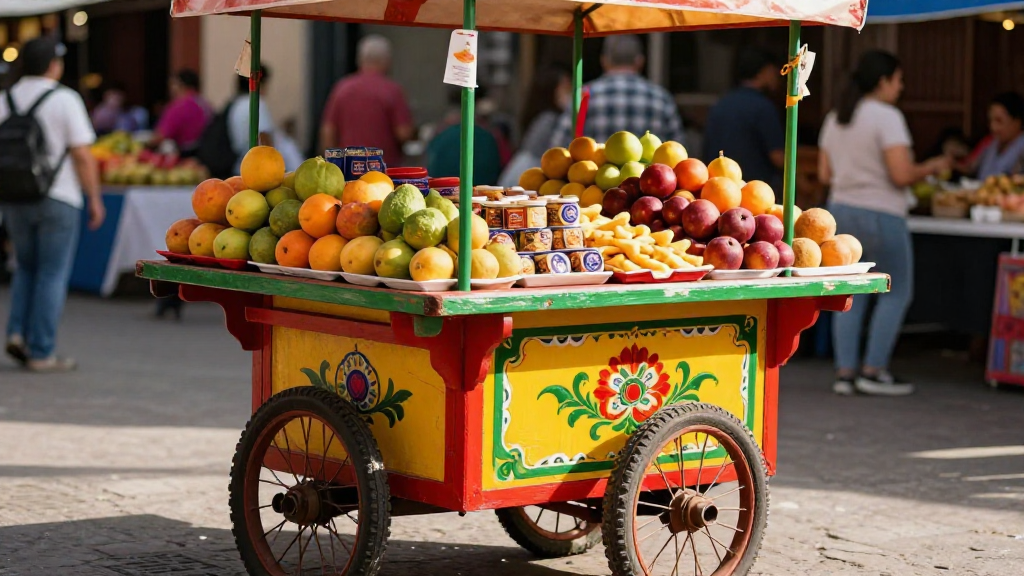
Latin American street carts come in a vibrant variety of designs, colors, and functionalities.
These mobile food and merchandise vendors are an intrinsic part of urban life throughout the region.
From bustling market squares to busy city streets, these street carts reflect the rich culture, diverse food offerings, and entrepreneurial spirit of Latin America.
What Makes Latin American Street Carts Unique?
Latin American street carts are unlike anything else you might find around the world.
They boast specific characteristics that set them apart:
-
Colorful Aesthetics:
– Brightly painted exteriors that often include artistic designs.
– Eye-catching signage displaying the names of dishes or items sold. -
Variety of Products:
– Selling food items such as tacos, empanadas, and churros along with drinks like fresh juices and coffee.
– Offering handmade crafts, clothing, and other unique goods in certain regions. -
Mobility and Convenience:
– Many carts have wheels for easy transport, allowing vendors to set up shop where customers are most plentiful.
– Lightweight materials make them easy to maneuver through crowded streets.
What Types of Latin American Street Carts Are Common?
Understanding the types of Latin American street carts helps illustrate their diversity.
Let’s explore some of the most popular varieties:
-
Food Carts:
– Taco Carts:- These typically serve a range of savory taco options, often accompanied by fresh salsas.
- Ice Cream Carts:
- Loaded with flavors like coconut and mango, these carts provide a refreshing treat.
- Snack Carts:
- Selling fried plantains, corn on the cob, or churros for a quick bite.
-
Beverage Carts:
– Juice Carts:- Fresh fruit juices are pressed daily, with carts often surrounded by colorful displays of whole fruits.
- Coffee Carts:
- Providing strong coffee and sweet pastries, often found in busy urban areas.
-
Craft Carts:
– Handmade Goods:- Selling local artisan crafts, jewelry, or textiles that reflect the cultural heritage of the region.
How Are Latin American Street Carts Designed?
The design of Latin American street carts is both functional and creative.
Here are a few distinguishing features:
-
Compact Size:
– Allowing for usage in crowded areas or narrow streets. -
Durable Materials:
– Often made from metal, wood, or a combination of both to withstand daily use. -
Customizable Layouts:
– Design features vary widely depending on the vendor’s offerings.
– Carts may include built-in grills for cooking or compartments for storage. -
Cultural Influences:
– Many carts reflect local traditions, with designs inspired by indigenous art or historical elements.
What Role Do Latin American Street Carts Play in Community Life?
Latin American street carts fulfill an essential role in the fabric of many communities.
Here’s how:
-
Economic Opportunities:
– Street carts offer a low-cost entry into entrepreneurship for many individuals.
– Vendors can earn a living and support their families with relatively modest investments. -
Social Gatherings:
– Street carts serve as popular meeting spots where people gather to eat, socialize, and enjoy community events. -
Culinary Variety:
– They introduce locals and visitors alike to a myriad of culinary traditions and flavors.
– New dishes and fusion foods often arise from street carts, reflecting the dynamic nature of urban cuisine.
What Are Some Popular Dishes from Latin American Street Carts?
When exploring Latin American street carts, you’re sure to encounter an array of mouth-watering options.
Here are some of the most beloved dishes:
-
Tacos al Pastor:
– Marinated pork, grilled and served with pineapple, onions, and cilantro. -
Arepas:
– Cornmeal cakes stuffed with various fillings including cheese, meats, or avocados. -
Sopes:
– Thick corn tortillas topped with beans, meat, vegetables, and salsa. -
Elotes:
– Grilled corn on the cob slathered in mayonnaise, cheese, chili powder, and lime. -
Churros:
– Fried dough pastries coated in sugar and often served with chocolate or caramel sauce.
Where Can You Find Latin American Street Carts?
Latin American street carts can be spotted almost everywhere across the region.
Here are some hotspots where you might discover them:
-
Urban Centers:
– Major cities such as Mexico City, Buenos Aires, and São Paulo feature vibrant street vendors in bustling commercial areas. -
Festivals and Events:
– Street cart vendors often set up stalls at local festivals, offering unique dishes to festival-goers. -
Markets:
– Open-air markets, or “mercados,” are rustic hubs where you can often find varied street carts side by side.
How Can You Support Latin American Street Cart Vendors?
Supporting Latin American street carts is vital for sustaining community culture and economy.
Here are some ways to contribute:
-
Buy Local:
– Choose to purchase food and goods directly from vendors, elevating their income and ensuring their livelihoods. -
Spread the Word:
– Share your experiences on social media, highlighting beloved vendors and their signature dishes. -
Promote Fair Practices:
– Advocate for policies that support street vendors to foster safer environments for their operations.
Conclusion: Embrace the Vibrancy of Latin American Street Carts
Latin American street carts encapsulate the heart and soul of their communities in a way that is both tasty and visually appealing.
They offer an array of choices that cater to diverse tastes, showcasing the rich cultural heritage unique to the region.
By understanding what Latin American street carts look like, what they offer, and the role they play in community life, you can truly appreciate their value.
Whether you’re in Latin America or visiting, make it a point to explore these colorful carts and savor the experience!