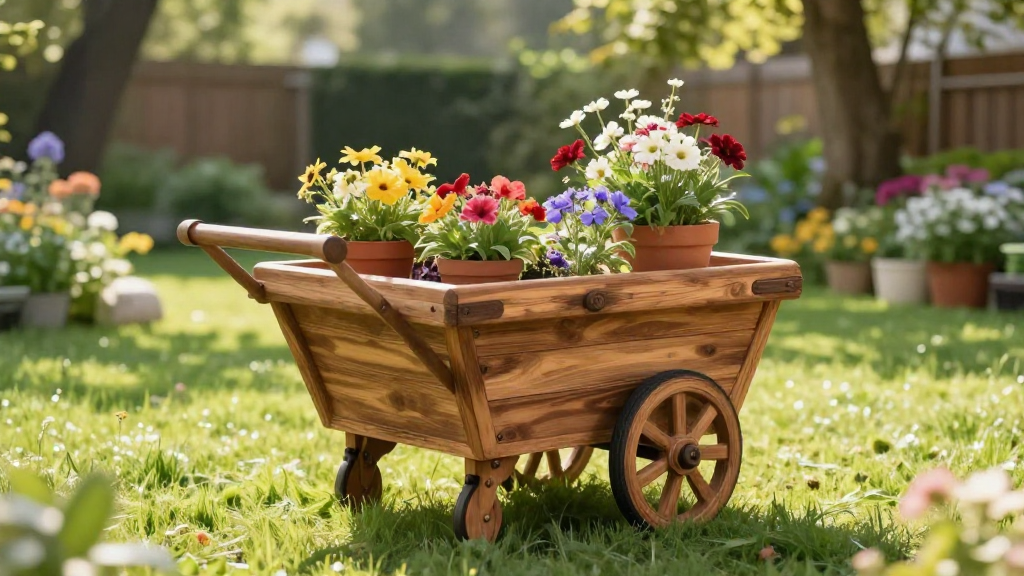
Creating a DIY garden cart not only enhances your gardening experience but also makes transporting tools and plants more convenient.
With a little creativity and some basic materials, you can construct your own garden cart that suits your specific needs.
What Is a DIY Garden Cart?
A DIY garden cart is a simple yet effective tool designed to make gardening tasks easier.
Whether you’re moving soil, potting plants, or transporting heavy garden tools, a garden cart can help you save time and reduce strain on your body.
By building your own cart, you can customize its size, shape, and features to meet your gardening requirements.
Why Should You Build Your Own Garden Cart?
Building a DIY garden cart comes with several benefits:
-
Customization: You can tailor the cart’s size and design to fit your specific needs.
-
Cost-Effective: Creating your own garden cart can be significantly less expensive than purchasing a pre-made one.
-
Durability: By selecting high-quality materials, you can ensure that your cart will last for years to come.
-
Satisfaction: There’s a sense of achievement that comes with building something from scratch.
What Materials Do You Need?
Before you start building your DIY garden cart, gather the following materials:
- Wood: Plywood or other lumber works best for a sturdy cart.
- Wheels: Look for durable rubber wheels that can handle heavy loads.
- Axle: A metal rod or a piece of wood that can support the wheels.
- Nails or Screws: For fastening parts together.
- Wood Glue: For added stability.
- Handle: A sturdy handle can be made from wood or metal.
- Paint or Stain: Optional, for protective and aesthetic purposes.
You may also need basic tools such as a saw, drill, measuring tape, and a hammer.
How Do You Build a DIY Garden Cart?
Building your own DIY garden cart can be simple and enjoyable. Here’s a step-by-step guide:
Step 1: Measure and Cut the Wood
Measure out planks of wood for the bottom of the cart, sides, and handle.
A common size for the base is around 36 inches long by 24 inches wide.
Cut each plank according to your measurements ensuring that all cuts are straight.
Step 2: Assemble the Base
-
Position the base wood: Lay your cut base planks on a flat surface.
-
Attach the sides: Fix the side planks to the base’s edges using nails or screws. Ensure they are perpendicular to the base for balance.
-
Secure the corners: Use wood glue in conjunction with screws to strengthen the corners.
Step 3: Add the Axle and Wheels
-
Drill two holes for the axle into the base of your cart, approximately 5-10 inches from each end.
-
Insert the axle: Feed the axle through the holes and secure it in place.
-
Attach the wheels: Slide the wheels onto each end of the axle, ensuring they’re firmly attached.
Step 4: Create the Handle
-
Cut a piece of wood about 3 feet long for the handle.
-
Attach the handle: Secure one end of the handle vertically at the back of the cart using screws and wood glue. It should be at a suitable height for easy handling.
Step 5: Finishing Touches
-
Smooth the edges: Sand down any rough edges to prevent splinters.
-
Paint or stain: For weather resistance and a more finished look, paint or stain your cart.
-
Add compartments: Consider adding wooden dividers inside the cart for better organization of tools.
How to Maintain Your DIY Garden Cart?
Proper maintenance will ensure the longevity of your DIY garden cart. Here are a few tips:
-
Clean Regularly: Remove dirt and debris to prevent decay.
-
Check for Damage: Regularly inspect the wheels and joints for wear and tear.
-
Repaint or Restain: Over time, the color may fade or wear off; reapply as necessary.
-
Lubricate Wheels: Keep wheels functioning smoothly by applying lubricant when they start to squeak.
Can You Personalize Your Cart?
Absolutely! A DIY garden cart can be as personalized as you wish. Here are some ways:
-
Add Hooks: Install hooks on the sides for tools like rakes and shovels.
-
Paint Unique Designs: Use stencils or freehand your favorite patterns or colors.
-
Include Storage Bins: Attach removable storage bins for small tools, seeds, or gloves.
-
Integrate a Seat: For long gardening sessions, consider including a small seat on the cart.
Conclusion
Building a DIY garden cart offers you a perfect blend of functionality and personalization.
Whether you’re a novice gardener or an experienced green thumb, a garden cart can tremendously enhance your efficiency in managing garden tasks.
Before you go, remember that taking on this project not only provides a practical tool but also gives you the satisfaction of creating something uniquely yours.
So, grab your materials and get started on your very own DIY garden cart today! Happy gardening!