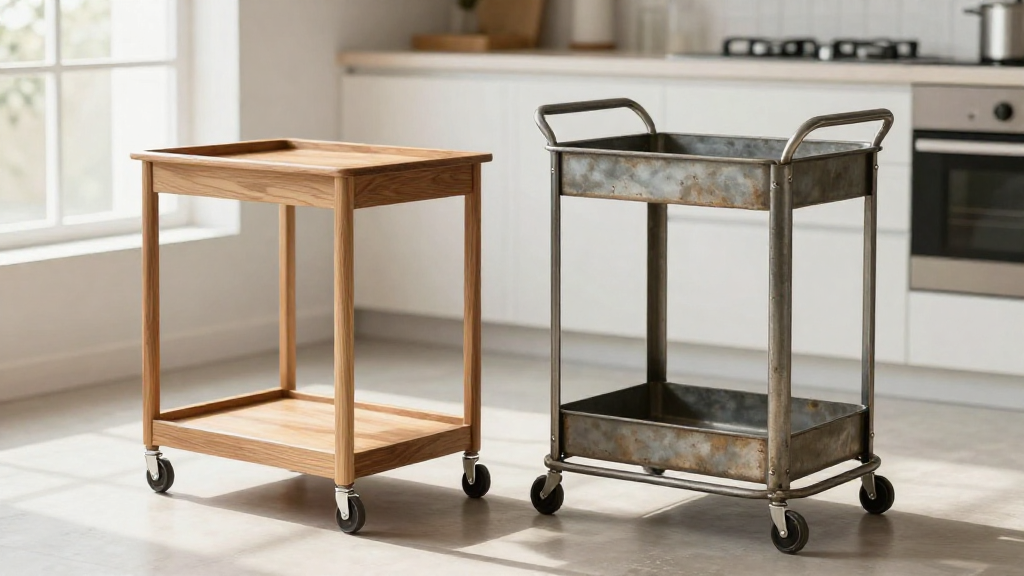
When it comes to organizing and transporting items, the debate of rolling cart vs utility cart often arises.
Both options have their unique features and benefits that cater to different needs.
Let’s explore the key differences and help you decide which cart is best suited for your purposes.
What is a Rolling Cart?
A rolling cart is typically designed with wheels for easy mobility.
Here are some key features:
- Mobility: They often come with four wheels, which facilitates easy transportation across various surfaces.
- Versatility: Suitable for both home and office environments, rolling carts can be used for storing items like books, art supplies, or even kitchen essentials.
- Design: Many rolling carts feature multiple levels or tiers, allowing for increased storage capacity.
- Portability: Often lightweight, they can be moved easily from room to room.
Popular Uses for Rolling Carts
- Kitchen Storage: Perfect for extra counter space, rolling carts can hold utensils, pots, or appliances.
- Crafting and Hobbies: Artists often use them to keep supplies organized and easily accessible.
- Office Organization: They can store office supplies, files, and equipment while providing mobile workspace when needed.
What is a Utility Cart?
A utility cart, on the other hand, is generally more robust and designed for heavy-duty tasks.
Here are its defining features:
- Sturdiness: Utility carts are often constructed from heavier materials like metal or high-grade plastic, making them suitable for carrying heavier items such as tools or equipment.
- Weight Capacity: They typically have a higher weight limit than rolling carts, depending on their frame and build quality.
- Static or Mobile: While many utility carts also come with wheels, some are stationary and designed to stay in one place, mainly used for storage.
- Multi-functional: Utility carts can come with additional features like storage bins, drawers, and specialized compartments for specific tools or items.
Common Applications for Utility Carts
- Warehouse Use: They are ideal for transporting goods or tools within a warehouse.
- Medical Facilities: Medical utility carts are prevalent in hospitals for moving supplies and equipment efficiently.
- Maintenance: Often found in maintenance scenarios, these carts facilitate tasks by keeping tools and hardware organized.
What are Key Differences Between These Carts?
Now that we’ve defined rolling carts and utility carts, let’s delve into the key differences between rolling cart vs utility cart to understand which one may suit your needs better.
Design and Structure
- Rolling Carts: Include multiple levels for storage; lightweight and easy to transport.
- Utility Carts: Generally more robust; suitable for carrying heavier loads.
Wheels and Mobility
- Rolling Carts: Feature four wheels for easy mobility; ideal for frequent movement.
- Utility Carts: May have wheels for mobility, but some are designed to remain stationary.
Weight Capacity
- Rolling Carts: Generally have a lower weight capacity than utility carts; more focused on ease of movement.
- Utility Carts: Built to handle heavier items, making them versatile for various tasks.
Usability
- Rolling Carts: Popular for home, office, and hobby use; emphasize convenience and accessibility.
- Utility Carts: Designed for industrial, medical, or maintenance settings; focus on durability and functionality.
Which Cart Should You Choose?
Now that you are familiar with rolling cart vs utility cart, the question arises: which one is right for you?
Here are a few considerations to help guide your decision:
Consider Your Usage Needs
- Mobility vs Stability: If you plan on moving items frequently, a rolling cart might be the best choice.
- Material Handling: If your tasks involve transporting heavy tools or equipment, opt for a utility cart.
Weight Capacity and Size
- Storage Requirements: Assess the weight of the items you frequently transport. If they are on the heavier side, opt for a utility cart.
- Available Space: Consider where you will keep the cart; a rolling cart may be better for limited spaces.
Aesthetic Preferences
- Design Options: If visual appeal is important, many rolling carts come in various styles, colors, and materials to match your decor.
- Functionality vs Appearance: Utility carts prioritize functionality and may not be as visually pleasing but are very effective in practical applications.
Additional Features to Consider
While deciding between rolling cart vs utility cart, also think about additional features that may sway your decision:
- Adjustable Shelves: Some rolling carts offer adjustable heights for shelves, making them adaptable to varying storage needs.
- Storage Bins: Look for utility carts with built-in bins or drawers for added convenience.
- Locking Mechanisms: For carts that will be utilized in public or shared spaces, locking wheels can prevent movement.
Conclusion
In the end, the choice between rolling cart vs utility cart boils down to your specific needs, the types of items you transport, and where you plan to use the cart.
- If you desire lightweight mobility and flexibility for home or office use, a rolling cart is likely the best fit.
- For heavy-duty tasks requiring durability and stability, a utility cart is the way to go.
By assessing your usage, weighing the pros and cons, and considering additional features, you can confidently choose the right cart to meet your storage and transport needs.
Whether you opt for a rolling cart or a utility cart, investing in an effective organizational solution is a step towards enhancing your productivity and efficiency.