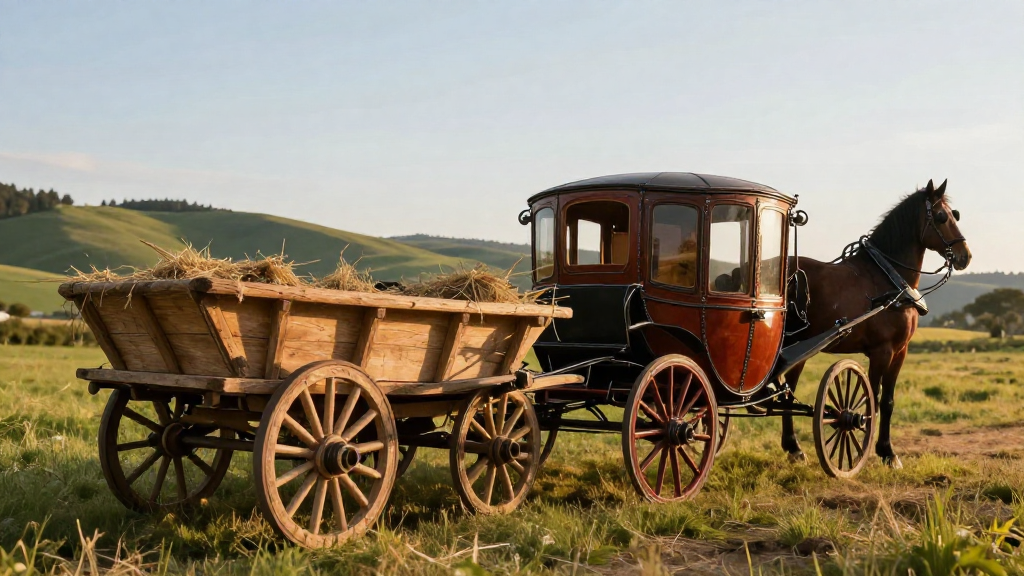
Understanding the difference between cart and carriage can help clarify how these two modes of transportation have evolved and what they are used for today.
What Are Carts?
Carts are simple vehicles used primarily for transporting goods rather than passengers.
Typically pulled by animals such as horses, donkeys, or oxen, carts can also be transported by hand.
They feature two wheels, a platform, and sometimes a cover for protection from elements.
Features of Carts
-
Wheels: Usually two, allowing for easier navigation on rough terrain.
-
Construction: Often made of wood or metal, focusing on durability and functionality.
-
Capacity: Designed to hold heavy loads of various materials including agricultural products, supplies, or personal goods.
-
Use: Commonly employed in farming, construction, and other industries where goods need to be transported.
What Are Carriages?
Carriages, on the other hand, are more sophisticated vehicles that primarily serve to transport people.
They usually come equipped with a seating area, often covered to protect passengers from rain and sun.
Features of Carriages
-
Wheels: Generally four, improving stability and comfort for passengers.
-
Design: Often more decorative, with upholstered seating and stylish exteriors.
-
Purpose: Primarily designed for leisure or formal travel rather than for transporting goods.
-
Types: Varieties include horse-drawn carriages, victorias, and landaus, each serving specific needs in transportation.
What Is the Difference Between Cart and Carriage?
When you examine the difference between cart and carriage, it’s evident that they serve distinct purposes.
1. Functionality
-
Carts: Primarily meant for transporting goods, making them utilitarian in nature.
-
Carriages: Designed for comfort and style, focusing on the transportation of people.
2. Construction
-
Carts: Generally simpler in design and construction, focusing on strength and durability.
-
Carriages: More intricate designs with a focus on aesthetics, often constructed using fine materials.
3. Capacity and Stability
-
Carts: Traditionally have two wheels, offering less stability but greater agility on uneven ground.
-
Carriages: With four wheels, they provide better stability, crucial for the comfort of passengers.
4. Usage Context
-
Carts: Commonly used in agricultural settings, markets, and construction sites, reflecting a practical approach to transport.
-
Carriages: Often seen in urban settings or special occasions, emphasizing social status and elegance.
Are There Modern Interpretations of Carts and Carriages?
Yes, the modern world has seen evolved versions of both carts and carriages.
Modern Carts
-
Shopping Carts: Used in supermarkets to carry groceries.
-
Golf Carts: Small vehicles designed to transport golfers and their equipment on the golf course.
-
Freight Carts: Used in warehouses and factories for moving heavy materials.
Modern Carriages
-
Limousines: Offer luxurious travel for special occasions and events.
-
Horse-Drawn Carriages: Still popular in tourism hotspots for city tours or romantic rides.
Can the Two Interchange?
While the difference between cart and carriage is significant, there can be instances where their roles blur, especially in rural or less-developed regions where functionality might take precedence over form.
Real-World Examples
-
Utility Vehicles: In some rural areas, you may find simplified carriages used to transport goods, sharing characteristics of carts.
-
Adapted Carriages: Some modern carriages are designed to carry cargo, being more versatile than their historical relevance.
Why Is Understanding the Difference Important?
Recognizing the difference between cart and carriage is essential for various reasons.
-
Historical Insight: Understanding the evolution of transportation methods reveals much about social and economic conditions throughout history.
-
Cultural Significance: Different regions may exhibit unique adaptations of carts and carriages, reflecting local culture and lifestyle.
-
Practical Applications: Knowing when to employ a cart or a carriage in modern contexts can lead to better logistical decisions.
Conclusion
In sum, while both carts and carriages are vehicles with historical significance, their differences are defined by their design, use, capacity, and cultural contexts.
Carts emphasize functionality and practicality for transporting goods, while carriages focus on style and comfort for passenger transport.
As they evolve, the roles they play can sometimes converge, but their core purposes remain distinct.
Understanding the difference between cart and carriage enhances our appreciation for the evolution of transportation, ensuring we can apply this knowledge in practical ways today.