Consistent seasoning depends on more than taste alone. The best salinity meters for professional kitchens help chefs, caterers, and food-production teams measure salt concentration quickly when repeatable results matter.
This roundup compares food-focused testers with multipurpose saltwater and water-quality meters, highlighting the features that affect accuracy, workflow, cleaning, and long-term value.
Best 10 Salinity Meters for Professional Kitchens Picks for 2026
Best Multi-Use Range
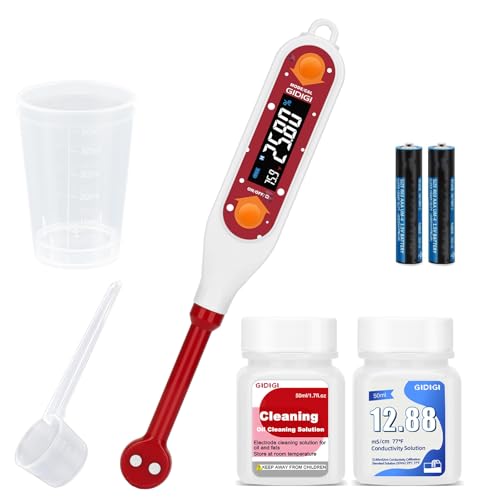
- 0.01%-26.00% salinity range
- Also measures EC, TDS, temperature, and specific gravity
- Includes calibration and cleaning supplies
Best For: Professional kitchens handling brines, sauces, fermentation, and water testing
Best Straightforward Kit

- Digital salinity readout
- Fully temperature compensated
- Includes probe, calibration fluid, and chart
Best For: Buyers seeking a basic salinity-testing kit
Best Hot-Liquid Workflow
Digital 0-10% Food Salinity Tester

- Three-second readings up to 99°C
- Displays salt percentage and sodium ions
- 304 stainless probe with IP66 body
Best For: Fast checks of soups, brines, pasta water, and sauces
Best Compact Brine Tool

- 0-10%/100 ppt measurement range
- Platinum-plated electrode resists buildup
- Vibration and value lock aid busy kitchens
Best For: Portable checks of brines, soups, sauces, pickles, and seafood liquids
Compact Kitchen Tester

- Food-focused tester for soups, stews, and sauces
- Temperature compensation and LED level indicators
- Compact pen design with copper test tip
Best For: Portable seasoning checks in kitchens and restaurants
Water Monitoring Specialist

- Measures 0–50 ppt salinity in water
- Adds temperature readings and vibration alerts
- Platinum-plated electrodes resist corrosion
Best For: Aquaculture and marine-water monitoring
Everyday Food Check

- Made for soups, broths, and sauces
- Bright LED display for low-light reading
- Handheld design with copper testing component
Best For: Routine food salinity checks and meal preparation
Versatile Water Monitoring Pick

- Measures salinity, specific gravity, and temperature
- Backlit display with ATC and audible alerts
- Portable, waterproof pen design
Best For: Multi-purpose water monitoring beyond food preparation
Pool-Specific Choice

- Reads 0–9,999 ppm or 0.0–1.0% salt
- Measures temperature from 0–55 °C
- IP65 waterproof construction
Best For: Saltwater pool and koi-pond maintenance, not food testing
Broad-Range Multiparameter Pick
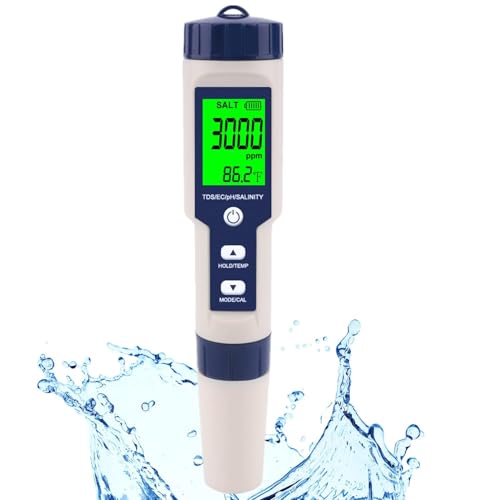
- Combines salinity, pH, temperature, EC, and TDS
- Supports ppm, ppt, and percentage displays
- Lists a 0.01–25% food-testing range
Best For: Mixed food-salt and water-quality monitoring
Best Multi-Use Range – GIDIGI Food Salinity Meter
For professional kitchens that need more than a basic salt reading, this portable option is one of the more versatile salinity meters for professional kitchens. It measures salinity, EC, TDS, temperature, and seawater specific gravity, making it useful for brines, sauces, fermented foods, and related water-testing tasks.
Best For: Kitchens, food makers, and aquaculture users needing one meter for food liquids and water measurements.
Pros:
- Measures salinity from 0.01% to 26.00%, covering low- and high-salt applications.
- Includes automatic temperature compensation, calibration solution, cleaning solution, and a measuring cup.
- Backlit display, lock-on readings, and a lightweight 85 g design support portable use.
- Useful for brine, soups, kimchi, sauerkraut, kombucha, sauces, and marine water.
Cons:
- Hot-soup samples must be below 176°F and should have oil skimmed off before testing.
- Its broad set of water-testing functions may be more than a kitchen focused only on salt concentration needs.
The wide measurement range and included maintenance supplies make this a flexible choice for kitchens with varied recipes and fermentation work. Its temperature limit and sample-preparation requirements are worth planning for during busy service.
Best Straightforward Kit – Pinpoint Salinity Meter Kit
The Pinpoint Salinity Meter Kit is a simple option among salinity meters for professional kitchens, especially for buyers who want a digital readout without a long list of extra functions. It combines a temperature-compensated meter with a probe, calibration fluid, and a conversion chart.
Best For: Users who want a basic, temperature-compensated salinity meter with the essential setup items included.
Pros:
- Provides a digital salinity readout for quick reference.
- Fully temperature compensated according to the supplied product information.
- Includes the meter, probe, calibration fluid, and conversion chart.
Cons:
- The supplied notes do not specify its salinity measurement range or response time.
- The product information does not identify food-specific construction or kitchen-focused features.
This kit is best considered when a straightforward meter and calibration accessories matter more than specialized food functions. Because the supplied specifications are limited, confirm that its range and intended application fit your recipes before purchase.
Best Hot-Liquid Workflow – Digital 0-10% Food Salinity Tester
Designed around everyday cooking tasks, this food tester is a practical pick among salinity meters for professional kitchens that frequently check soups, pasta water, brines, and sauces. It delivers a reading in about three seconds, supports liquids up to 99°C, and displays salt concentration alongside temperature.
Best For: Busy kitchens that want quick, food-focused salt checks directly from cooking vessels.
Pros:
- Reads 0-4.99% salt in 0.01% steps and 5-10% in 0.02% steps.
- Provides salt percentage and sodium-ion readings with automatic conversion.
- Uses a food-grade 304 stainless-steel probe and supports liquids up to 99°C.
- Three-second response, finish alerts, large display, IP66 housing, and fold-out hook suit active kitchens.
Cons:
- Its 0-10% range is narrower than meters designed for higher-salinity fermentation or concentrated brines.
- The supplied accuracy varies by concentration, with wider tolerances at higher salt levels.
- The notes describe a home-kitchen-oriented workflow, which may not replace a broader professional instrument for every application.
For routine cooking checks, the fast response, hot-liquid capability, and clear salt/sodium display are strong practical advantages. Choose a different model if your kitchen regularly measures salt concentrations above 10%.
Best Compact Brine Tool – LOHAND LH-SA10 Salinity Meter
The LOHAND LH-SA10 is a compact choice among salinity meters for professional kitchens, with a 0-10%/100 ppt range suited to brine, soup, sauces, pickles, and seafood preparations. Its vibrating value lock can make readings easier to notice in a noisy kitchen.
Best For: Chefs and food makers who need a portable meter for common low- to medium-salinity food liquids.
Pros:
- Measures salinity from 0-10% or up to 100 ppt for common food-processing tasks.
- Platinum-plated electrode is designed for corrosion resistance and reduced impurity buildup.
- Vibration and value lock help communicate a completed reading in busy environments.
- Compact 5.9-ounce design includes batteries, cleaning cloth, manual, and cover opener.
Cons:
- The 0-10% range may not suit very concentrated fermentation brines.
- The supplied notes do not state a response time, accuracy specification, or temperature-compensation feature.
- No food-specific temperature limit or hot-liquid guidance is provided in the listed details.
This model emphasizes portability, straightforward operation, and a durable platinum electrode rather than an extensive feature set. It is a sensible fit for routine brine and sauce checks, provided its range and unspecified temperature behavior match your workflow.
Compact Kitchen Tester – Electronic Food Salinity Pen
For cooks comparing salinity meters for professional kitchens, this compact electronic pen is designed for quick checks of salt concentration in soups, stews, sauces, and other prepared foods. Its temperature compensation function, sensitive response, and LED level indicators support straightforward seasoning adjustments.
Best For: Chefs, restaurant kitchens, and home cooks who want a portable food-focused salt concentration tester.
Pros:
- Designed specifically for measuring salt concentration in food.
- Temperature compensation helps support consistent readings.
- Compact 155 mm pen-style design with LED level indication.
- Plastic construction and a copper test tip are described as corrosion-resistant.
Cons:
- The notes do not specify a numerical measurement range or resolution.
- Only the tester is listed in the package contents, with no batteries or accessories mentioned.
This is a practical choice when portability and food testing matter more than detailed numerical specifications. Verify the available display levels and operating requirements before purchasing for high-volume professional use.
Water Monitoring Specialist – LOHAND LH-SA50 Salinity Meter
Among salinity meters for professional kitchens, the LOHAND LH-SA50 stands out as a water-oriented instrument rather than a direct food-seasoning tester. It measures from 0 to 50 ppt, provides salinity and temperature readings, and includes features suited to repeated monitoring in aquaculture or saltwater environments.
Best For: Professional users monitoring brackish, marine, or aquaculture water near commercial kitchen and food-production operations.
Pros:
- Wide 0–50 ppt salinity range with a stated 1.000–1.037 specific-gravity range.
- Displays salinity and temperature together.
- Auto-lock, vibration alert, and one-click unlocking support fast field testing.
- Platinum-plated electrodes and a backlit color display are designed for repeated water monitoring.
Cons:
- It is specifically designed for aquaculture water, not soups, sauces, or finished food.
- Its larger package and feature set may be unnecessary for basic kitchen seasoning checks.
The LH-SA50 is the more specialized option for water-quality work, offering a defined range and useful alerts. For measuring salt in recipes, however, a dedicated food salinity tester is likely a better fit.
Everyday Food Check – NS01 LED Salinity Meter
This NS01 is a straightforward option for shoppers comparing salinity meters for professional kitchens and home food preparation. It is intended to measure salt content in soups, broths, and sauces, with a bright LED display and a handheld shape designed for easy operation.
Best For: Home cooks and food-preparation teams checking salt levels in liquid dishes under varied lighting conditions.
Pros:
- Designed for food salinity testing in soups, broths, and sauces.
- Bright LED display is intended to remain readable in low light.
- Handheld ergonomic form is easy to carry and operate.
- Heavy-duty construction is described as durable and reliable.
Cons:
- The supplied notes do not provide a numerical measurement range or accuracy specification.
- The color-coded red and green design may offer less detailed information than a numerical display.
The NS01 keeps the workflow simple for routine food checks and offers clear LED visibility. Consider it when ease of use is the priority, but confirm its measurement scale and suitability for your recipes before relying on it for precise production control.
Versatile Water Monitoring Pick – 3-in-1 Salinity Tester
For professional kitchens that also monitor aquaculture, hydroponics, or other water systems, this 3-in-1 meter combines salinity, specific gravity, and temperature readings in a compact pen. Its backlit display, automatic temperature compensation, and waterproof design support quick checks, though the stated salinity accuracy is more suited to general monitoring than precision food formulation.
Best For: Kitchens or culinary operations needing portable water-quality checks alongside aquarium, aquaculture, or hydroponic monitoring.
Pros:
- Measures salinity, specific gravity, and temperature in one device.
- Backlit LCD, ATC, audible testing alerts, and automatic shutoff simplify routine use.
- Compact, life-waterproof pen design is easy to carry.
Cons:
- Salinity accuracy is listed as ±1 ppt, which may not suit exact recipe or brine verification.
- The supplied notes do not identify it as a food-salt meter.
This is the most broadly featured option in the group, especially when kitchen staff need one portable instrument for several water-related tasks. For exact food salinity work, confirm that its range and accuracy match the application before buying.
Pool-Specific Choice – SALT-3050 Waterproof Meter
Although it may appear in searches for salinity meters for professional kitchens, the SALT-3050 is explicitly limited to saltwater pools and koi ponds. It measures salt concentration and temperature in a compact IP65 waterproof body, but it should not be used for food, marine aquariums, or other applications outside its stated purpose.
Best For: Professional facilities that maintain saltwater pools or koi ponds and need a pre-calibrated salt tester.
Pros:
- Measures 0–9,999 ppm or 0.0–1.0% salt concentration.
- Includes temperature measurement from 0–55 °C.
- IP65 waterproof construction supports wet-area testing.
Cons:
- Will not work for food salt-level testing.
- Not intended for sea, marine, or saltwater fish tanks.
- Its listed application is limited to saltwater pools and koi ponds.
This is not a suitable recommendation for kitchen brines, sauces, soups, or other food applications. Choose it only when your professional operation also needs pool or koi-pond maintenance, and use a food-rated instrument for culinary measurements.
Broad-Range Multiparameter Pick – 5-in-1 Salinity Meter
This multiparameter meter is the closest match for operations that want salinity testing plus broader water-quality checks. It combines salinity, pH, temperature, EC, and TDS, with separate display formats for ppm, ppt, and percentage. The supplied notes include a food salinity range, but kitchen users should still verify suitability for their specific ingredients and process.
Best For: Professional kitchens or food operations that need a single meter for food-salt checks and surrounding water-quality monitoring.
Pros:
- Combines salinity, pH, temperature, EC, and TDS functions.
- Supports pool, seawater, aquarium, and food salinity ranges.
- Displays salinity in ppm, ppt, or percentage to reduce unit conversions.
Cons:
- The supplied notes do not provide salinity accuracy specifications.
- Its many modes may be more than needed for a kitchen requiring only salt measurement.
- Food testing is listed at 0.01–25%, but application-specific validation is still advisable.
With its stated food range and multiple water-testing modes, this is the strongest all-around candidate for a mixed culinary and facility-monitoring workflow. Its value is highest when pH and other water measurements are useful, rather than when a dedicated food salinity meter is preferred.
How We Picked the Best Salinity Meters for Professional Kitchens
We focused first on whether each meter is suitable for measuring salt concentration in food or liquid samples. We also compared measurement range, resolution, reading speed, probe construction, temperature capability, water resistance, display design, and portability. Food-service environments demand equipment that is simple to sanitize and easy to read during busy prep periods, so practical operation matters as much as headline specifications.
Some models in this selection are designed primarily for food, while others target saltwater pools, aquariums, or ponds. Those multipurpose meters may be useful for brines and liquid ingredients, but buyers should verify that the manufacturer supports their intended food-contact application.
Quick Comparison
| Feature | Why It Matters | Best For |
|---|---|---|
| Food-specific design | Better fit for sauces, soups, brines, and prepared foods | Professional kitchens and food production |
| 0–10% salt range | Covers many culinary mixtures while showing concentration directly | Stocks, sauces, pickles, and brines |
| Temperature measurement | Helps interpret readings and monitor hot or chilled samples | High-volume prep and quality control |
| Water-resistant housing | Provides extra protection against splashes and spills | Commercial kitchen workstations |
| Specific gravity or ppt readings | Useful for saltwater applications but less direct for food recipes | Aquaculture, pools, and specialty liquids |
Key Buying Factors for Salinity Meters for Professional Kitchens
Measurement Range and Resolution
Choose a range that covers your recipes without sacrificing readability. A 0–10% range is a practical choice for many culinary applications, while 0.01% resolution can help with precise formulation and batch control. For very salty or specialized mixtures, confirm that the upper limit is sufficient.
Probe and Sample Compatibility
Look for a durable stainless-steel or platinum electrode and check whether the probe can be cleaned safely after testing. Thick, particulate-rich, oily, or hot samples may require dilution, filtering, or cooling before measurement. Follow the product instructions rather than placing an unapproved probe directly into food.
Calibration and Repeatability
Calibration requirements vary. A meter with straightforward calibration and readily available standards is generally easier to maintain in a commercial setting. Consistent sample temperature, thorough rinsing, and regular checks against a known solution will produce more dependable results.
Speed, Display, and Durability
Fast readings reduce interruptions during service. A clear LED or LCD display, automatic temperature compensation, hold function, and splash-resistant housing can make a noticeable difference. Waterproof ratings are helpful, but they do not necessarily mean the instrument is safe for immersion or food contact.
Who Should Buy Which Salinity Meters for Professional Kitchens?
Choose a food-specific digital tester if your priority is checking soups, sauces, brines, and other culinary mixtures. Select a model with temperature measurement if your team tests samples across different cooking or storage conditions. A compact pen-style meter suits mobile catering and smaller prep areas, while a sturdier waterproof design is better for frequent use near sinks and production stations.
Those working with aquariums, pools, ponds, or saltwater systems should consider the meters offering salinity, specific gravity, pH, EC, or temperature readings. They can be versatile, but they are not automatically the best choice for food safety or recipe control. Before purchasing, confirm calibration support, cleaning instructions, replacement probes, warranty coverage, and whether the readings are reported in the units your recipes and quality records use.