Making fresh oil at home does not have to require commercial-scale equipment. The best oil presses under $100 offer a practical way to process seeds, nuts, and other ingredients while keeping the setup relatively compact and affordable.
This roundup compares manual and electric models across power, capacity, temperature adjustment, controls, and intended use so you can choose a press that fits your ingredients, workload, and kitchen or workshop space.
Best 10 Oil Presses Under 100 Picks for 2026
Versatile Electric Pick
Automatic Hot & Cold Oil Press

- Adjustable 50–250°C temperature range
- Processes 3–6 kg of material per hour
- Stainless steel body with included filter
Best For: Home users wanting automated temperature control
Manual Multi-Use Choice

- Electricity-free manual operation
- 3-liter capacity for small batches
- Also handles juice, cheese, cider, and wine
Best For: Small-batch, quiet household pressing
Temperature-Controlled Pick
610W Digital Hot & Cold Oil Press

- Digital hot and cold pressing controls
- Eight-minute preheat countdown
- Overheating protection and auto shutoff
Best For: Controlled electric pressing of nuts and seeds
Compact Manual Option

- Physical pressing without chemical ingredients
- 304 stainless-steel body and handle
- Compact 1-liter household design
Best For: Hands-on pressing of oil-rich nuts and seeds
Best Adjustable-Temperature Pick

- 304 stainless-steel construction
- Cold and hot pressing modes
- Digital temperature control and timer
Best For: Home users pressing a variety of nuts and seeds
Best High-Output Pick
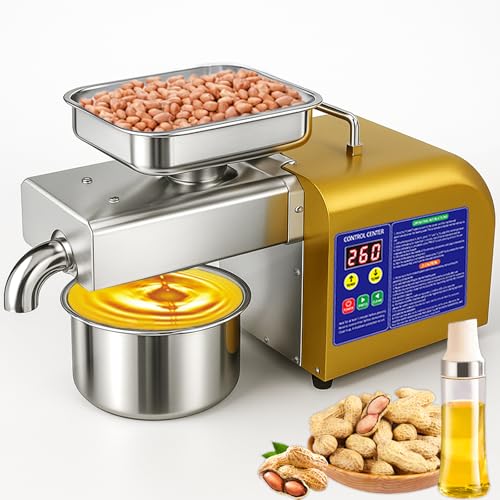
- Processes 11–20 pounds per hour
- 104–572°F temperature range
- Includes filter and pressing accessories
Best For: Higher-volume home or commercial-style pressing
Best Separation System

- Cold and hot pressing modes
- 104–410°F temperature control
- Separates residue and includes a filter
Best For: Users wanting filtered oil and manageable batch sizes
High-Capacity Pick

- Hot- and cold-press modes
- Adjustable 104°F–464°F temperature range
- Up to 9–13.5 pounds per hour
Best For: Frequent home or light commercial oil pressing
Versatile Temperature Pick

- Processes over 30 ingredient types
- 122°F–572°F hot-press control
- Up to 8.27 pounds per hour
Best For: Versatile home, restaurant, or small-market use
Compact Stainless-Steel Pick

- 50°C–250°C adjustable heating
- 304 stainless-steel construction
- 3–6 kilograms per hour
Best For: Routine peanut and sesame seed pressing
Versatile Electric Pick – Automatic Hot & Cold Oil Press
For shoppers comparing oil presses under 100, this automatic model offers adjustable heating, stainless-steel construction, and support for several common oilseeds. Its displayed temperature range and included filter make it a practical option for home oil pressing.
Best For: Users who want an electric press with adjustable hot and cold-style temperature control for peanuts, sunflower seeds, soybeans, walnuts, and similar ingredients.
Pros:
- Non-fingerprint stainless-steel shell resists rust and is easier to clean.
- Temperature can be adjusted from 50–250°C with automatic heating and display control.
- Supports an estimated throughput of 3–6 kg per hour, with peanut oil yield listed at 40–46%.
- Includes an oil cup, filter, insulation gloves, and instruction manual.
Cons:
- Requires hand washing according to the care instructions.
- The listing contains varying power references, including 610W, 600W, and a 150W motor.
This is a feature-rich choice for buyers who prefer automated heating and a broader temperature range. Verify the included specifications before purchase if motor wattage is an important factor.
Manual Multi-Use Choice – 3-Liter Hand-Crank Press
Among oil presses under 100, this manual press stands out for its 3-liter capacity and electricity-free operation. It is designed primarily for juice, cider, wine, and cheese, but the manufacturer also lists olive oil as a possible use.
Best For: Buyers seeking a portable, quiet manual press for occasional small-batch pressing of fruit, vegetables, cheese, and certain oil materials.
Pros:
- Manual operation requires no electricity and produces about 35 dB during pressing.
- 3-liter capacity suits small household batches.
- Triangle energy-saving ball handle is designed to improve stability and torque.
- Stainless steel and iron construction is listed as dishwasher safe.
Cons:
- This is a general-purpose press rather than a dedicated seed-oil expeller.
- Manual operation requires physical effort.
- Its 31-inch height may need substantial counter or floor space.
Choose this model if versatility, quiet operation, and no power cord matter more than automated oil extraction. For frequent seed pressing, a dedicated oil press may be more convenient.
Temperature-Controlled Pick – 610W Digital Hot & Cold Oil Press
For shoppers evaluating oil presses under 100, this 110V electric model combines hot and cold pressing with digital temperature control. Its 304 stainless-steel construction, preheat timer, and overheating protection are useful for more controlled home pressing.
Best For: Users who want a corded oil press with a digital display, automatic temperature management, and support for nuts and common oilseeds.
Pros:
- 304 stainless steel is designed for heat resistance, wear resistance, and durability.
- Supports both hot and cold pressing with a digital temperature display.
- Eight-minute preheat countdown reduces the need for manual timing.
- Includes overheating protection, auto shutoff, cooling holes, a fan, and raised-base heat dissipation.
Cons:
- Requires a 110V corded power source.
- Hand washing is recommended.
- The listing uses both 610W and 650W model references, so buyers should confirm the exact configuration.
This is a strong fit for buyers who value repeatable temperature settings and safety features. Its digital controls make it more structured to use than a basic manual press, though it remains dependent on household power.
Compact Manual Option – Household Seed Oil Expeller
Among oil presses under 100, this compact manual expeller is aimed directly at household seed and nut pressing. Its physical screw-press design avoids chemical ingredients, while the stainless-steel body offers a durable, portable setup.
Best For: Hands-on users pressing oil-rich materials such as peanuts, sunflower seeds, sesame seeds, walnuts, or coconut in small batches.
Pros:
- Manual physical pressing produces oil without chemical ingredients.
- 304 stainless-steel body and handle are designed to resist rust.
- Compact 1-liter capacity and portable design suit household use.
- Includes a one-year warranty and English instructions.
Cons:
- Manual operation requires continuous effort.
- Continuous heating is required during use, so careful operation is important.
- The manufacturer does not recommend flaxseed, rapeseed, or olive use.
This model makes sense for buyers who want a dedicated, compact seed-oil press and do not mind hands-on operation. Its material limitations are important to review before choosing it for a particular crop.
Best Adjustable-Temperature Pick – Compact Cold & Hot Press
Among oil presses under 100, this model stands out for its stainless-steel construction, adjustable temperature controls, and cold- or hot-pressing flexibility. Its 150W copper motor is rated for processing 6.61–13.22 pounds of raw materials per hour, depending on the ingredient.
Best For: Home users who want adjustable-temperature pressing for nuts and seeds.
Pros:
- 304 stainless-steel construction with polished surfaces and detachable components.
- Supports both cold and hot pressing for different ingredients and flavor goals.
- Digital temperature display, thermostatic regulation, and an 8-minute preheat timer.
- Designed for peanuts, almonds, sesame, sunflower seeds, walnuts, soybeans, and similar oil-rich crops.
Cons:
- Hand-wash care is recommended.
- The notes list a 150W motor while also specifying 610W maximum power, so the power details may require clarification.
This is a versatile choice if temperature control and easier cleanup matter more than a highly specialized commercial workflow. Its dual-mode design makes it particularly adaptable for small-batch home pressing.
Best High-Output Pick – 1800W Automatic Oil Press
For shoppers comparing oil presses under 100, this automatic model emphasizes speed and sustained operation. Its 1800W motor is rated to process 11–20 pounds per hour, and the temperature can be set from 104°F to 572°F for hot or cold extraction.
Best For: Users prioritizing high throughput and automatic temperature-controlled pressing.
Pros:
- High-powered 1800W motor with a stated continuous operating capability of up to 24 hours.
- Rated processing capacity of 11–20 pounds per hour.
- Broad 104–572°F temperature range with real-time temperature display and countdown operation.
- Includes a filter, oil cup, cleaning brush, gloves, hopper, press chamber, residue pipe, and press rod.
Cons:
- Freshly pressed oil should settle for 24 hours before separation and use.
- It cannot process olives themselves, cocoa beans, spices, flowers, herbs, or coffee beans.
- At 25.1 pounds, it is less convenient to move than a lightweight countertop appliance.
This model is the strongest fit for buyers who value output and long operating sessions. Confirm that your preferred ingredients are supported, and plan for settling and filtering after pressing.
Best Separation System – 610W Intelligent Oil Press
This 610W machine is a practical contender among oil presses under 100, pairing cold and hot modes with intelligent temperature control and built-in oil-residue separation. It is rated for up to 8.8 pounds per hour and uses an 80RPM press screw.
Best For: Domestic or light commercial users who want filtered oil and separated press residue.
Pros:
- Cold- and hot-pressing modes accommodate different ingredients and extraction preferences.
- Intelligent temperature control covers 104–410°F.
- Residue conduit and included filter help remove solid impurities from the extracted oil.
- Includes a bowl, filter, cleaning brush, insulated gloves, power cord, and English manual.
Cons:
- Its stated processing capacity is up to 8.8 pounds per hour, lower than the 1800W model in this roundup.
- The product is 16.93 inches deep, which may require meaningful counter space.
Choose this press if cleaner separation and straightforward controls are central to your buying decision. Its moderate throughput and included accessories make it a balanced option for regular household batches.
High-Capacity Pick – 820W Hot and Cold Oil Press
For shoppers comparing oil presses under 100, this 820W model stands out for its hot- and cold-press settings, stainless-steel construction, and stated capacity of up to 9–13.5 pounds per hour. Its temperature display and automatic heating controls make it suited to frequent home or light commercial use.
Best For: Buyers who want a high-capacity machine with adjustable temperature control and both pressing methods.
Pros:
- Offers both hot and cold pressing modes.
- Displays and adjusts pressing temperatures from 104°F to 464°F.
- Designed for continuous operation and up to 9–13.5 pounds per hour.
- Includes a filter, oil cup, cleaning brush, gloves, and other pressing accessories.
Cons:
- Not intended for olives, cocoa beans, spices, flowers, herbs, or coffee beans.
- Hand-wash care is required.
- Its larger capacity and commercial-use design may be more than occasional users need.
This is the strongest fit when throughput and flexibility matter most. Confirm that your intended ingredients are supported before buying, especially if you plan to press materials outside the listed nuts and seeds.
Versatile Temperature Pick – VEVOR Automatic Oil Press
Among oil presses under 100, this VEVOR machine is a practical option for users who prioritize ingredient flexibility and hot-press temperature control. It is rated to process up to 8.27 pounds of flaxseed per hour and includes core accessories for filtering, handling, and cleanup.
Best For: Home cooks, restaurants, or small-market users pressing a broad range of nuts and seeds.
Pros:
- Handles more than 30 types of nuts, seeds, and oil-rich ingredients.
- Provides adjustable hot-press temperatures from 122°F to 572°F.
- Rated for up to 8.27 pounds of flaxseed per hour.
- Includes an oil cup, filter screen, gloves, and cleaning brush.
Cons:
- The supplied specifications describe hot pressing rather than a dedicated cold-press mode.
- At 23.8 pounds, it is relatively heavy to move frequently.
- Its 20.47-inch length may require substantial counter or storage space.
The VEVOR is a good choice when ingredient compatibility and a wide temperature range are more important than compact size. Its heavier build and hot-press focus are worth considering before purchase.
Compact Stainless-Steel Pick – 610W Adjustable Oil Press
If you are comparing oil presses under 100 for routine seed pressing, this 610W stainless-steel model offers adjustable heating from 50°C to 250°C and a stated processing rate of 3–6 kilograms per hour. Its included filter, oil cup, gloves, and brush make it a reasonably complete setup for peanut and sesame oil.
Best For: Users seeking a straightforward stainless-steel press for peanuts, sesame, and similar seeds.
Pros:
- Adjustable pressing temperature from 50°C to 250°C.
- 304 stainless-steel construction with a non-fingerprint outer shell.
- Processes a stated 3–6 kilograms of raw material per hour.
- Includes a press bar, funnel, residue outlet, oil cup, filter, gloves, and brush.
Cons:
- The supplied details identify it as an automatic-heating machine but list a special feature of “Manual.”
- The notes focus on hot/cold extraction generally but do not explain separate operating modes.
- Hand-wash care is required.
This model makes sense for buyers who want adjustable heating and a durable steel housing without the higher stated throughput of larger machines. Review the operating instructions carefully if mode selection is important to you.
How We Picked the Best Oil Presses Under 100
We focused on the features that matter most at this price: pressing method, motor power, temperature range, construction, operating capacity, and ease of use. The selection includes manual presses for occasional batches and electric machines designed for more consistent, higher-volume work.
Because manufacturer specifications can vary, consider advertised capacity and wattage as useful comparison points rather than guarantees of real-world output. Seed type, moisture, preparation, and temperature all affect performance.
Quick Comparison
| Type | Best For | Main Advantage | Potential Trade-Off |
|---|---|---|---|
| Manual press | Small batches and occasional use | No electricity required | More physical effort and slower output |
| 610W electric press | General home use | Good balance of power and price | Usually lower throughput than larger machines |
| 820W–1,800W electric press | Frequent or heavier pressing | Faster processing potential | More heat, noise, and counter-space demands |
| Commercial-style electric press | Large batches or small-scale production | Higher capacity and adjustable controls | May be oversized for casual users |
Key Buying Factors for Oil Presses Under $100
Manual or Electric Operation
A manual model is simple, portable, and less dependent on maintenance-prone electrical components. Choose one if you press small amounts and do not mind turning a handle. Electric presses are more convenient for repeated batches but need a nearby outlet and a stable work surface.
Power, Speed, and Capacity
Higher wattage can support demanding ingredients and longer sessions, but it does not automatically mean better oil yield. Check the stated feed rate, hopper size, and duty cycle. A compact 610W machine may be more practical than a larger unit if storage and batch size are limited.
Temperature Control
Adjustable hot-and-cold settings provide more flexibility for different seeds and preferred processing styles. Verify the actual temperature range and whether controls are simple enough to use accurately. Always follow the manufacturer’s guidance for heating and ingredient preparation.
Materials and Cleanup
Stainless steel components are generally preferable around food and can be easier to maintain. Look for removable pressing parts, accessible residue paths, included tools, and clear cleaning instructions. Never assume every component is dishwasher-safe.
Who Should Buy Which Oil Presses Under 100?
- Choose a manual press if you want the simplest setup, process occasional small batches, or need a machine that works without power.
- Choose a 610W electric model if you want an affordable all-purpose option for common seeds and nuts.
- Choose an 820W or higher-power press if you process larger batches or value faster operation and stronger continuous performance.
- Choose a commercial-style model if you have adequate ventilation, counter space, and a clear need for adjustable temperature and higher throughput.
Before buying, confirm voltage compatibility, available space, included accessories, warranty terms, and whether the machine supports the ingredients you plan to press most often.