Finding a comfortable boning knife can be difficult for left-handed cooks, especially when blade bevels, handles, and finger guards favor right-handed use. The right design can make trimming meat, separating joints, and filleting fish more controlled.
We selected 10 knives spanning flexible fillet blades, curved trimming knives, commercial-grade options, and left-handed Japanese designs. Use the comparison and buying advice below to match blade geometry, steel, handle comfort, and maintenance needs to your kitchen.
Best 10 Boning Knives for Left Handed Cooks Picks for 2026
Best Everyday Pick
Victorinox Fibrox Curved Boning Knife

- Flexible 6-inch blade for delicate cuts
- Slip-resistant ergonomic Fibrox handle
- Swiss made and NSF approved
Best For: Everyday poultry and fish trimming
Best Dedicated Left-Handed Choice
Japanese Left-Handed Deba Knife

- Specifically crafted for left-handed users
- Forged White Steel #2 blade
- Traditional magnolia wood handle
Best For: Left-handed fish butchery
Best Value
Mercer Culinary Ultimate White Curved Boning Knife
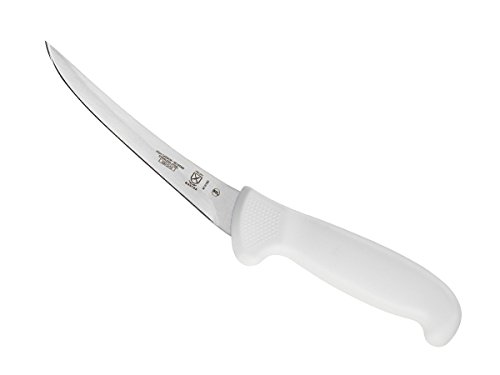
- High-carbon Japanese steel blade
- Textured non-slip handle
- Useful for chicken, ham, and fish
Best For: Budget-conscious everyday deboning
Best Flexible Fillet Option

- Flexible 7-inch high-carbon stainless blade
- Comfortable pakkawood handle
- Suitable for fish, poultry, and meat
Best For: Multi-purpose filleting and trimming
Best Flexible Pick
Cutluxe 6-Inch Curved Boning Knife

- Flexible curved blade for meat and fish
- Full-tang pakkawood handle
- Lifetime warranty included
Best For: Flexible trimming, filleting, and deboning
Best Complete Set
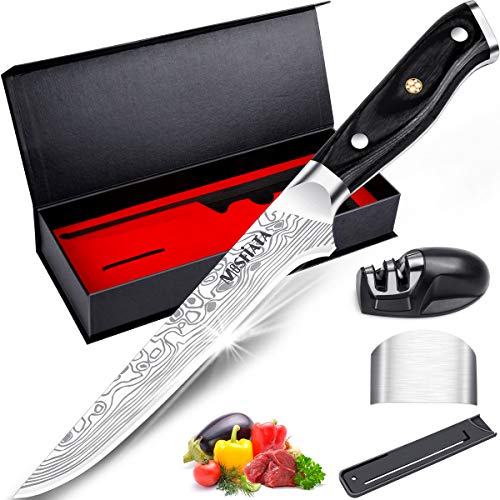
- Includes sharpener and finger guard
- Comfortable Micarta handle
- Forged German stainless steel blade
Best For: Home cooks wanting useful accessories
Best Commercial Value

- Commercial-grade design
- Slip-resistant finger-indented handle
- Sharp German steel blade
Best For: Daily kitchen and foodservice meat trimming
Balanced Everyday Pick

- Flexible blade for deboning, trimming, and skinning
- Hand-honed 15-degree-per-side edge
- Ergonomic pakkawood handle
Best For: Home cooks seeking a versatile everyday boning knife
Fish-Focused Flexibility

- Long, thin, flexible 7-inch blade
- Japanese 10Cr15CoMoV high-carbon steel
- Designed for fish, meat, and poultry
Best For: Fish-focused cooks wanting a flexible multi-use knife
Premium Sharpness Choice
SHAN ZU 7-Inch Japanese Fillet Knife

- Japanese super steel with Honbazuke finishing
- Hand-sharpened edge and 32-step construction
- Lightweight 191 g ergonomic design
Best For: Experienced cooks prioritizing sharpness and refined construction
Best Everyday Pick – Victorinox Fibrox Curved Boning Knife
For cooks comparing boning knives for left handed cooks, the Victorinox Fibrox 6-inch curved model is a practical option for trimming poultry, fish, and other delicate cuts. Its flexible stainless steel blade and textured handle emphasize control and comfort during routine prep.
Best For: Everyday deboning and trimming, especially chicken and fish.
Pros:
- Curved, flexible 6-inch stainless steel blade suits delicate cuts.
- Textured Fibrox handle is slip resistant and ergonomically designed.
- Swiss made, NSF approved, and backed by a lifetime guarantee against material and workmanship defects.
Cons:
- The flexible blade is geared toward thinner, delicate cuts rather than heavy butchery.
- Sharpener is sold separately.
This is a strong general-purpose choice for left-handed cooks who want a lightweight, professional-style knife with a secure grip. The notes do not specify a left-handed blade grind, so verify the cutting geometry if that is essential to your technique.
Best Dedicated Left-Handed Choice – Japanese Left-Handed Deba Knife
Among boning knives for left handed cooks, this 5.9-inch Japanese Deba stands out because it is specifically crafted for left-handed users. Its forged White Steel #2 blade is intended for precise fish butchery, including filleting and cutting fish heads.
Best For: Left-handed cooks who primarily butcher small to medium fish.
Pros:
- Explicitly designed for left-handed users.
- Hand-forged Shirogami #2 high-carbon steel offers sharpness and edge retention.
- Lightweight, moisture-resistant magnolia handle supports controlled handling.
- Forged and finished by artisans in Seki City, Japan.
Cons:
- Its fish-focused Deba design may be less versatile for general meat trimming.
- High-carbon steel requires attentive care to maintain its performance.
- At 8.2 ounces, it is substantially heavier than the Victorinox option.
This is the clearest match for shoppers who need genuinely left-handed geometry and regularly prepare fish. Its traditional construction favors confident, deliberate cuts over lightweight, all-purpose kitchen use.
Best Value – Mercer Culinary Ultimate White Curved Boning Knife
For shoppers seeking boning knives for left handed cooks at a value-oriented price point, the Mercer Culinary Ultimate White offers a 6-inch curved blade for separating meat from bone. Its textured handle is designed to provide a secure, comfortable grip during kitchen prep.
Best For: Home cooks and value-minded users deboning chicken, ham, and fish.
Pros:
- High-carbon Japanese steel supports sharpness and easier edge maintenance.
- Curved 6-inch blade is suited to deboning and trimming fat or sinew.
- Textured finger points provide a non-slip grip and added comfort.
- Designed for both professional and home kitchen use.
Cons:
- The product notes do not identify it as left-handed or specify a left-handed grind.
- Hand washing and thorough drying are recommended; it should not go in the dishwasher.
- The stamped construction may appeal less to cooks seeking a forged knife.
This Mercer is a sensible budget-conscious option when grip comfort and everyday meat preparation matter most. Left-handed users should confirm that the blade geometry feels comfortable for their preferred cutting direction.
Best Flexible Fillet Option – imarku 7-Inch Fillet Knife
For left-handed cooks who want a longer, flexible blade, the imarku 7-inch fillet knife combines high-carbon stainless steel with a design aimed at fish filleting, poultry deboning, and meat trimming. The ergonomic pakkawood handle is shaped for comfort during extended prep.
Best For: Multi-purpose filleting, poultry deboning, and trimming with a longer flexible blade.
Pros:
- Thin, flexible 7-inch blade adapts to ingredients for precise cuts.
- 10Cr15CoMoV high-carbon stainless steel is rated at 59±2 Rockwell C.
- Pakkawood handle is designed to reduce fatigue and provide a comfortable grip.
- Forged construction and heat treatment support durability and edge performance.
Cons:
- The notes do not specify a left-handed design or blade grind.
- Its longer 7-inch blade may feel less maneuverable for very tight trimming.
- The wood-based handle requires sensible moisture care.
This is a versatile choice for cooks who move between fish, poultry, and meat and prefer a longer fillet-style blade. Because left-handed geometry is not stated, confirm the edge orientation before buying.
Best Flexible Pick – Cutluxe 6-Inch Curved Boning Knife
For left handed cooks seeking boning knives for left handed cooks, the Cutluxe offers a flexible, curved 6-inch blade suited to filleting, deboning, trimming, skinning, and butterflying. Its ergonomic full-tang pakkawood handle is designed for controlled handling, though the listing does not specify a left-handed blade grind.
Best For: Cooks who want a flexible curved blade for meat and fish preparation.
Pros:
- Flexible high-carbon German steel blade with a 14–16-degree edge per side.
- Curved profile supports filleting, trimming, skinning, and butterflying.
- Full-tang, triple-riveted pakkawood handle with a sheath included.
- Lifetime warranty against material or workmanship defects.
Cons:
- The product information does not confirm a left-handed-specific design.
- A curved blade may feel less familiar to cooks who prefer straight boning knives.
This is a strong all-around option when flexibility and a curved profile matter most. Left handed cooks should verify that the handle and blade feel comfortable in their preferred grip before buying.
Best Complete Set – MOSFiATA 6-Inch Boning Knife
Among boning knives for left handed cooks, the MOSFiATA stands out for its included accessories and comfortable Micarta handle. The 6-inch forged German high-carbon stainless steel blade is intended for slicing, deboning, and dicing, although the listing does not identify a left-handed grind.
Best For: Home cooks who want a boning knife bundled with a sharpener, finger guard, and sheath.
Pros:
- Hand-polished 14–16-degree edge per side and 56 ± 2 HRC hardness.
- Micarta handle is designed to reduce wrist tension and accommodate different grip positions.
- Includes a finger guard, knife sharpener, sheath, and gift box.
- German stainless steel resists rust, corrosion, and discoloration.
Cons:
- The listing does not confirm that the blade is designed specifically for left-handed use.
- The included sharpener may require learning proper sharpening technique.
- Warranty coverage is limited to a 30-day refund and one-year replacement warranty.
Its accessory bundle makes this a practical starter choice for cooks building a meat-preparation setup. The neutral handle design may suit left handed cooks, but comfort should be confirmed in person when possible.
Best Commercial Value – Winco 6-Inch Red Boning Knife
Winco 6" Red Plastic Commercial-Grade Boning Knife | Razor sharp, Restaurant service
Check Price On AmazonFor left handed cooks comparing boning knives for left handed cooks, the Winco provides a straightforward commercial-grade design. Its razor-sharp 6-inch German steel blade and slip-resistant red plastic handle are built for removing meat from bones, but the product details do not specify left-handed sharpening.
Best For: Frequent kitchen or foodservice use where a durable, easy-grip handle is useful.
Pros:
- X50 Cr MoV15 German steel blade is designed for removing meat from bones.
- Slip-resistant plastic handle has finger indentations for extended-use comfort.
- Commercial-grade construction is intended for daily foodservice use.
- NSF listed.
Cons:
- The product information does not confirm a left-handed-specific blade design.
- Plastic construction offers less premium feel than a wood or Micarta handle.
- No sheath or sharpening accessory is listed among the included components.
This is the most utilitarian option of the three, emphasizing a grippy handle and commercial durability over extras. It can suit left handed cooks who prioritize simple, repeatable meat trimming and do not need a specialty left-handed grind.
Balanced Everyday Pick – PAUDIN 6-Inch Boning Knife
For cooks comparing boning knives for left handed cooks, the PAUDIN offers a compact 6.1-inch blade suited to deboning, trimming, skinning, and butterflying. Its flexible high-carbon stainless-steel blade and contoured pakkawood handle make it a practical choice for everyday meat preparation, though the supplied information describes the handle as ergonomically balanced rather than specifically ambidextrous.
Best For: Home cooks who want a versatile, flexible boning knife for routine meat and poultry preparation.
Pros:
- Flexible 6.1-inch blade supports deboning, filleting, trimming, and skinning.
- Hand-honed 15-degree-per-side edge is designed for low-resistance slicing.
- Ergonomic pakkawood handle and balanced construction support comfortable handling.
- Forged high-carbon stainless steel offers rust and corrosion resistance.
Cons:
- The product information does not confirm a left-handed-specific handle design.
- Its 5Cr15MoV steel is practical and cost-conscious, but not positioned as premium Japanese steel.
The PAUDIN is a sensible all-around option when you value maneuverability and versatility over a specialty fish-filleting profile. Left-handed users should confirm that the handle shape feels comfortable in their preferred grip.
Fish-Focused Flexibility – HOSHANHO 7-Inch Fillet Knife
Among boning knives for left handed cooks, the HOSHANHO stands out for its long, thin, flexible 7-inch blade. It is designed to follow the shape of fish while also handling meat, poultry, trimming, skinning, and butterflying. The notes do not specify a left-handed profile, so grip comfort should be checked before purchase.
Best For: Cooks who primarily fillet fish but want one flexible knife for broader meat-preparation tasks.
Pros:
- 7-inch flexible blade helps adapt to fish contours and cut with precision.
- Japanese 10Cr15CoMoV high-carbon stainless steel is described as durable and sharp.
- Hand-polished 15-degree-per-side edge supports clean slicing.
- Pakkawood handle has corrosion- and abrasion-resistant properties.
Cons:
- The supplied details do not identify the handle as specifically ambidextrous.
- At 300 g, it is heavier than the other listed options.
The HOSHANHO makes the most sense for users who prioritize fish filleting and want extra blade length. Its flexible design should appeal to left-handed cooks who prefer a neutral-feeling knife, but the handle should be evaluated for individual comfort.
Premium Sharpness Choice – SHAN ZU 7-Inch Japanese Fillet Knife
For shoppers seeking boning knives for left handed cooks, the SHAN ZU combines a 7-inch fillet profile with Japanese super steel and extensive hand-finishing. Its sharp, forged blade is aimed at precise fish and meat work. Because the supplied notes do not state that the handle is left-handed or ambidextrous, users should confirm the ergonomic fit for their preferred grip.
Best For: Experienced cooks who prioritize sharpness, edge retention, and a refined forged construction.
Pros:
- Japanese steel blade is forged and hand-sharpened through the Honbazuke method.
- 32-step manufacturing process emphasizes precision and finish.
- 7-inch format offers a useful balance for filleting and boning tasks.
- K133 ergonomic handle and 191 g weight support controlled handling.
Cons:
- The product information does not confirm a left-handed-specific or ambidextrous design.
- Its emphasis on sharpness may require more careful handling and maintenance than a basic utility knife.
The SHAN ZU is the most premium-leaning choice in this group, especially for cooks who value fine edge work and Japanese craftsmanship. For left-handed users, the key buying check is whether the K133 handle feels natural and secure in the off-hand grip.
How We Picked the Best Boning Knives for Left Handed Cooks
We evaluated these knives by focusing on the features that matter most during close cutting: blade flexibility, edge control, handle ergonomics, corrosion resistance, overall length, and suitability for meat or fish. We also considered whether a knife is explicitly left-handed or uses a symmetrical design that works comfortably in either hand.
Because product specifications and user preferences vary, this list includes several blade styles rather than treating one shape as universally best. A curved blade can help with trimming and following contours, while a narrow, flexible fillet blade is often better for fish. Straight, stiffer blades may offer more control when working around joints and connective tissue.
Quick Comparison
| Best For | Recommended Style | Blade Length | What to Look For |
|---|---|---|---|
| General trimming | Curved boning knife | 6 inches | Moderate flex and secure grip |
| Fish filleting | Flexible fillet knife | 7 inches | Narrow blade and corrosion resistance |
| Left-handed Japanese cutting | Dedicated left-hand deba | About 6 inches | Correct bevel orientation and balanced handle |
| Commercial prep | Easy-clean utility design | 6 inches | Durable handle and practical maintenance |
Key Buying Factors for Boning Knives for Left-Handed Cooks
Bevel Orientation and Symmetry
Check whether the edge is ground for left-handed use. A single-bevel knife designed for right-handed users can steer away from the cut or feel awkward in the opposite hand. Double-bevel blades are generally easier to share and may be more adaptable, but the handle and finger guard still deserve attention.
Flexibility and Blade Shape
Flexible blades follow fish bones and meat contours, while stiffer blades provide leverage for heavier trimming. Curved profiles can make repetitive trimming motions efficient, but a straight profile may offer more predictable contact for detailed work.
Handle Safety and Comfort
Look for a textured, slip-resistant handle that remains secure when wet or greasy. A finger guard can add protection, but confirm that it does not restrict your left-handed grip. Balance matters too: a knife that feels overly blade-heavy can cause fatigue during larger jobs.
Steel and Maintenance
High-carbon stainless steel can provide a useful combination of edge retention and corrosion resistance, but it still needs prompt drying and regular sharpening. Wash according to the manufacturer’s instructions, and avoid treating a boning knife as a cleaver unless it is specifically built for that work.
Who Should Buy Which Boning Knives for Left Handed Cooks?
Choose the dedicated left-handed Japanese deba if bevel orientation is your top priority and you want a specialized fish-preparation tool. For everyday meat trimming, the Victorinox, Mercer, Cutluxe, or similar 6-inch curved options offer practical proportions and maneuverability. If you process fish or prefer longer slicing passes, consider the imarku, HOSHANHO, or SHAN ZU 7-inch fillet-style knives.
For busy kitchens, the Winco’s commercial-oriented construction may be appealing, while the MOSFiATA or PAUDIN options suit shoppers seeking included accessories or a more feature-focused package. Before ordering, verify the edge orientation, return policy, and care instructions—particularly when buying a single-bevel knife for left-handed use.