A sharp kitchen knife is safer, faster, and easier to control than a dull one. The right sharpener can restore everyday blades without requiring professional sharpening skills or complicated equipment.
We compared 10 manual, rolling, and electric models for home cooks, focusing on ease of use, sharpening control, versatility, safety, and value.
Best 10 Knife Sharpener for Home Picks for 2026
Best All-Around Manual Pick
Longzon 5-in-1 Knife Sharpener

- Four-stage sharpening plus a scissors slot
- Non-slip base and included safety glove
- Compact design for everyday home use
Best For: Households sharpening knives and scissors with one manual tool
Best Electric Option
Presto EverSharp Electric Sharpener

- Three-stage powered sharpening system
- Guided angles reduce guesswork
- Adjusts for several blade thicknesses
Best For: Home users who prefer electric, guided sharpening
Best Quick Touch-Up Tool

- Sharpens many blades in about 10 seconds
- Reversible diamond-honed carbide blades
- Compact, ergonomic, and easy to clean
Best For: Fast everyday touch-ups for varied household blades
Best Controlled-Angle System
AIERLIAN Rolling Knife Sharpener

- 15- and 20-degree magnetic angle support
- Diamond, ceramic, and leather-strop stages
- Wood base with strong magnetic hold
Best For: Users seeking guided angles and a polished knife edge
Best Simple Manual Pick
Henckels 2-Stage Handheld Sharpener

- Coarse and fine ceramic grits
- Ergonomic safety-focused handle
- Non-slip base for stable use
Best For: Routine home knife maintenance
Best Safety-Bundle Pick
Kitchellence 3-Stage Sharpener
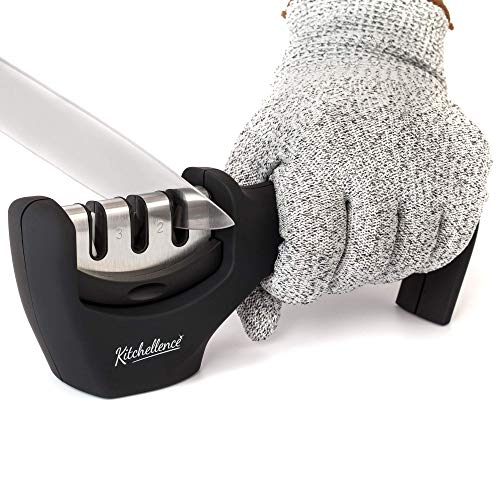
- Three stages repair and polish blades
- Cut-resistant glove included
- Non-slip base and ambidextrous handle
Best For: More complete home sharpening kits
Best Electric Time-Saver
Northmas 2-Stage Electric Sharpener

- Powered coarse and fine stages
- Designed for quick sharpening
- Compact 100–240V design
Best For: Fast, convenient kitchen sharpening
Best Adjustable Manual Pick
Precision Adjust 3-Stage Sharpener
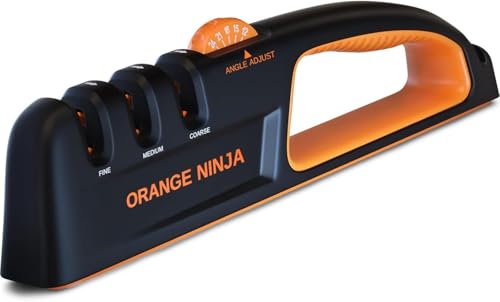
- Five adjustable angles from 12° to 24°
- Three-stage coarse, medium, and fine sharpening
- For straight-edge kitchen, pocket, and hunting knives
Best For: Home users who want manual angle control
Best Multi-Tool Electric Pick
Work Sharp MK2 Knife Sharpener

- Two-speed motor for control and heavier tasks
- Flexible belts handle straight and serrated blades
- Also sharpens scissors, axes, and garden tools
Best For: Homes maintaining knives and outdoor tools
Best Premium Electric Pick

- Three-stage sharpening, honing, and polishing
- Diamond abrasives and precision angle guides
- Handles straight-edge and serrated knives
Best For: Frequent home cooks wanting fast, consistent sharpening
Best All-Around Manual Pick – Longzon 5-in-1 Knife Sharpener
If you want a versatile knife sharpener for home use, the Longzon 5-in-1 combines four sharpening stages with a scissors slot. Its non-slip base, compact design, and included cut-resistant glove make it a practical option for routine kitchen blade maintenance.
Best For: Home cooks who want one manual tool for kitchen knives, scissors, and pocket knives.
Pros:
- Four stages cover scissors, coarse grinding, fine grinding, and precision grinding.
- Non-slip base helps keep the sharpener stable during use.
- Includes a cut-resistant glove and fits easily in a kitchen drawer.
Cons:
- Manual sharpening requires repeated passes and user effort.
- The supplied notes do not specify compatibility with serrated knives.
The Longzon stands out for broad household versatility and added safety features. It is a sensible choice when compact storage and support for multiple blade types matter more than electric convenience.
Best Electric Option – Presto EverSharp Electric Sharpener
The Presto EverSharp is a knife sharpener for home cooks who prefer powered, guided sharpening. Its three-stage system handles kitchen and sport knives, while the thickness selector helps match the guides to different blade types.
Best For: Users seeking electric sharpening with guided angles for standard, medium, and thinner blades.
Pros:
- Three-stage system includes coarse, medium, and fine sharpening steps.
- Blade guides hold the knife at a consistent angle.
- Sharpens kitchen, sport, and Santoku knives, with a selectable blade thickness setting.
Cons:
- At 5.1 pounds, it is substantially heavier than the manual options listed.
- Its larger footprint may require dedicated counter or storage space.
Choose the Presto when repeatable electric sharpening is the priority. The thickness selector adds useful flexibility, though its heavier build is less convenient for compact kitchens.
Best Quick Touch-Up Tool – AccuSharp Knife Sharpener
For fast maintenance, the AccuSharp is a compact knife sharpener for home use that is designed to restore many blades in about 10 seconds. Its ergonomic handle, full-length finger guard, and dishwasher-safe construction keep the process simple.
Best For: Cooks who want a small, quick sharpener for straight and serrated knives, cleavers, and other common blades.
Pros:
- Designed to sharpen most blades in around 10 seconds.
- Diamond-honed tungsten carbide blades can be reversed to extend service life.
- Ergonomic ambidextrous handle and full-length guard support controlled use.
Cons:
- Its coarse grit is geared toward fast restoration rather than multi-stage honing.
- It does not provide the angle-selection or polishing stages found on more elaborate sharpeners.
The AccuSharp is a strong fit for straightforward, occasional touch-ups. Its small size and easy cleaning make it especially convenient for cooks who value speed over a multi-step sharpening process.
Best Controlled-Angle System – AIERLIAN Rolling Knife Sharpener
The AIERLIAN rolling system is a knife sharpener for home cooks who want consistent angle control. Its magnetic support offers 15- and 20-degree settings, while diamond and ceramic discs plus a leather strop provide a staged sharpening and polishing routine.
Best For: Knife owners who want guided angle options and a refined finish for standard steel kitchen knives.
Pros:
- Provides 15- and 20-degree magnetic angle supports.
- Combines a #400 diamond disc with a #3000 ceramic disc.
- Includes a leather strop for burr removal and final polishing.
- Strong magnets and a wood base help hold the knife in position.
Cons:
- Not designed for serrated knives or scissors.
- The rolling process takes more time and steps than a quick pull-through sharpener.
The AIERLIAN is the most technique-oriented option in this group. Its angle settings and polishing accessories suit users who are willing to spend a few minutes for more controlled blade maintenance.
Best Simple Manual Pick – Henckels 2-Stage Handheld Sharpener
If you want a straightforward knife sharpener for home use, the Henckels handheld model keeps the process simple. Its coarse and fine ceramic grits are designed to restore sharpness quickly, while the contoured handle and rubberized base help provide comfortable, stable control.
Best For: Home cooks who want an easy-to-store manual sharpener for routine knife maintenance.
Pros:
- Two-stage coarse and fine ceramic sharpening
- Contoured, ergonomic handle with a safety grip
- Rubberized non-slip base helps keep it stable
- Compact 8-ounce design is easy to store
Cons:
- Manual pull-through design requires some hand effort
- Plastic construction may feel less substantial than metal alternatives
This is a practical choice for shoppers who prioritize ease of use and secure handling over advanced adjustability. The two-stage setup covers basic sharpening and finishing in one compact tool.
Best Safety-Bundle Pick – Kitchellence 3-Stage Sharpener
For a more comprehensive knife sharpener for home kitchens, this Kitchellence set combines three sharpening stages with a cut-resistant glove. The diamond slot repairs and straightens damaged blades, the second slot restores the edge shape, and the final slot polishes it.
Best For: Home cooks who want multiple sharpening stages plus an included glove for added protection.
Pros:
- Three-stage process for repair, sharpening, and polishing
- Includes a cut-resistant glove
- Ergonomic handle suits right- or left-handed users
- Non-slip base supports controlled sharpening
Cons:
- Its multi-stage process takes more steps than a basic two-stage sharpener
- Plastic construction may not appeal to shoppers seeking a heavier tool
The extra repair and polishing stages make this a versatile option for knives that need more than a quick touch-up. It is especially appealing if safety accessories and a guided pull-through design are priorities.
Best Electric Time-Saver – Northmas 2-Stage Electric Sharpener
If speed and convenience matter most, the Northmas electric knife sharpener for home use offers powered coarse and fine stages. The compact unit is designed to refresh knives quickly, with a polishing stage intended to leave a smoother, burr-free edge.
Best For: Busy home cooks who prefer powered sharpening and want a compact appliance with global-voltage support.
Pros:
- Electric two-stage sharpening and polishing
- Designed to refresh knives in about 30 seconds
- Compact body fits easily in crowded kitchens
- 100–240V design supports use in different regions
Cons:
- Requires access to electrical power
- At 1.2 pounds, it is less portable than a lightweight manual sharpener
- Powered operation may be more than needed for occasional touch-ups
This model makes sense for shoppers who value repeatable, fast sharpening and do not mind using an electric device. Its compact footprint and included adapter help keep the setup practical for home use.
Best Adjustable Manual Pick – Precision Adjust 3-Stage Sharpener
For shoppers seeking a practical knife sharpener for home, this manual system offers adjustable sharpening angles from 12° to 24°. Its three-stage design is intended for straight-edge kitchen, pocket, and hunting knives.
Best For: Home cooks and knife owners who want angle control without using an electric sharpener.
Pros:
- Five adjustable angles help match different sharpening needs.
- Three grit stages support coarse, medium, and fine sharpening.
- Compact ABS-and-rubber construction with an ergonomic handheld design.
Cons:
- Designed for straight-edge blades only.
- Not suitable for serrated knives or scissors.
- Manual sharpening requires pulling the blade through the slots.
This is a versatile choice when angle flexibility matters more than electric convenience. Its limitations are important, especially for households with serrated blades or scissors.
Best Multi-Tool Electric Pick – Work Sharp MK2 Knife Sharpener
The Work Sharp MK2 is a flexible electric option for a knife sharpener for home, especially if you also maintain outdoor and garden tools. Its abrasive belts and two-speed motor cover both everyday knives and heavier sharpening tasks.
Best For: Households that need one powered sharpener for kitchen knives, pocket knives, scissors, serrated blades, axes, and garden tools.
Pros:
- Two-speed motor provides added control for different sharpening tasks.
- Flexible belts conform to various blade edges and can sharpen serrated knives.
- Edge guide supports the knife through the tip for more repeatable sharpening.
- Includes abrasive belts and a three-year warranty.
Cons:
- Its broader tool capability may be more than needed for basic kitchen sharpening.
- Electric operation requires managing abrasive belts and motor speed.
Choose this model if versatility is a priority. It is particularly useful for homes where knife sharpening is only one part of regular tool maintenance.
Best Premium Electric Pick – Chef’sChoice 15XV EdgeSelect
For a fast, polished edge, the Chef’sChoice 15XV is a premium knife sharpener for home with three sharpening stages, diamond abrasives, and precision angle guides. It supports both straight-edge and serrated knives.
Best For: Home cooks who want a powered sharpener designed for quick, repeatable 15-degree edges.
Pros:
- Three-stage EdgeSelect system sharpens, hones, and polishes.
- 100-percent diamond abrasives are used in the first two stages.
- Works with straight-edge and serrated knives.
- First-time sharpening takes approximately one minute; resharpening takes about 10 seconds.
Cons:
- Heavier and larger than compact manual sharpeners.
- Designed around a 15-degree Trizor XV edge rather than multiple adjustable angles.
- Its premium electric design may be unnecessary for occasional sharpening.
This model stands out for speed and edge consistency, making it a strong fit for frequent kitchen use. Its fixed sharpening approach and larger footprint may matter to shoppers seeking maximum portability or adjustability.
How We Picked the Best Knife Sharpener for Home
We focused on sharpeners suited to typical household kitchens, from compact pull-through tools to adjustable electric systems. Our evaluation criteria included sharpening consistency, ease of use, compatibility with straight and serrated edges, safety features, construction, storage, and overall practicality.
Because different knives require different approaches, this list includes coarse stages for repairing dull edges, fine or ceramic stages for honing and polishing, diamond abrasives for harder steels, and angle-guided designs that help beginners maintain a consistent edge.
Quick Comparison
| Type | Best For | Main Advantage | Potential Limitation |
|---|---|---|---|
| Manual pull-through | Basic kitchen maintenance | Compact, affordable, and simple | Less control over pressure and angle |
| Rolling sharpener | Hands-on users seeking angle control | Consistent guided movement | Requires more setup and technique |
| Electric sharpener | Fast sharpening and frequent use | Quick, repeatable results | Usually larger and more expensive |
| Multi-stage sharpener | Repairing and polishing edges | Supports several maintenance steps | Extra stages may add complexity |
Key Buying Factors for a Knife Sharpener for Home
Sharpener Type and Control
Manual models are convenient for occasional touch-ups, while electric sharpeners make more sense for busy kitchens or users who want guided results. Rolling systems offer greater control but require a stable work surface and careful technique.
Knife Compatibility
Check whether the sharpener supports straight-edged, serrated, thick, narrow, or harder-steel blades. Serrated knives often need a dedicated setting or specialized tool rather than a standard sharpening slot.
Stages and Abrasive Materials
A coarse stage repairs noticeably dull edges, a medium stage reshapes or sharpens, and a fine ceramic stage polishes and hones. Diamond abrasives can work effectively on many hard steels, but aggressive sharpening should be used sparingly.
Safety and Ease of Use
Look for a nonslip base or handle, clear angle guides, guarded sharpening slots, and instructions that explain how much pressure to apply. Never force a blade through a slot, and keep fingers away from the sharpening path.
Maintenance and Storage
Compact manual sharpeners are easy to store, while electric units need counter space and occasional cleaning. Check replacement abrasive availability if you expect frequent use.
Who Should Buy Which Knife Sharpener for Home?
Choose a basic manual sharpener if you need an inexpensive, compact tool for routine kitchen touch-ups. Choose a multi-stage model if your knives range from lightly dull to significantly worn and you want coarse-to-fine maintenance in one device.
Choose a rolling sharpener if consistent angle control matters and you are comfortable spending more time sharpening. Choose an electric sharpener if speed, repeatability, or frequent sharpening is your priority.
For most households, the best Knife Sharpener for Home use is the one that matches your knives, available storage, and comfort level. A simple model is often enough for regular maintenance; advanced or electric systems are worthwhile when you need faster results, broader compatibility, or more precise control.