The right boning knife makes it easier to separate meat from bone, trim fat, and portion cuts cleanly. Blade flexibility, handle comfort, and control matter more than flashy extras.
We compared 10 popular options for home cooks, hunters, BBQ enthusiasts, and professional-style kitchens, with attention to blade shape, grip, durability, and everyday value.
Best 10 Boning Knife for Meat Picks for 2026
Versatile Semi-Stiff Pick
Victorinox Fibrox Pro Curved Boning Knife

- 6-inch curved, semi-stiff stainless steel blade
- Non-slip Fibrox Pro handle
- NSF compliant with lifetime warranty
Best For: General meat trimming, including beef, pork, and poultry
BBQ Carving Set
Cutluxe Brisket Slicing and Boning Knife Set
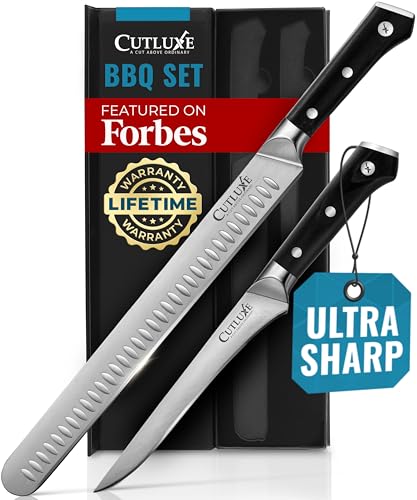
- Includes 6-inch boning and 12-inch slicing knives
- Granton edges help reduce sticking
- Full tang German steel construction
Best For: BBQ cooks preparing brisket and other large cuts
Flexible Precision Choice
Victorinox Fibrox Curved Boning Knife

- 6-inch curved flexible stainless steel blade
- Slip-resistant ergonomic Fibrox handle
- NSF approved Swiss-made design
Best For: Delicate meat, poultry, and fish
Commercial-Grade Value

- Razor-sharp German steel blade
- Slip-resistant red plastic handle
- Commercial-grade and NSF listed
Best For: Routine deboning and busy foodservice prep
Best Value Curved Boning Knife
Mercer Culinary Ultimate White 6-Inch
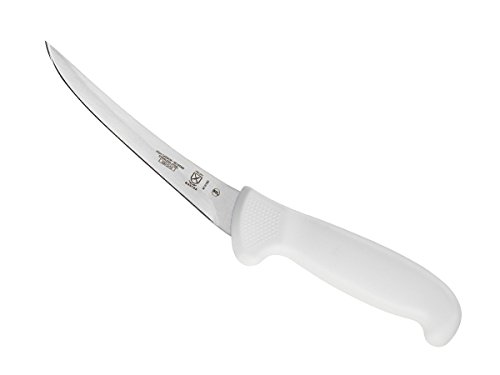
- High-carbon Japanese steel
- Curved blade for deboning and trimming
- Textured non-slip handle
Best For: Value-minded home cooks preparing chicken, ham, fish, and trimmed meat
Premium Forged Boning Knife

- Flexible hand-sharpened blade
- Forged German steel at 56+ Rockwell
- Full-tang triple-riveted handle
Best For: Detailed deboning, trimming, skinning, and fish preparation
Best Grip Curved Boning Knife
Mercer Culinary Millennia 6-Inch

- One-piece high-carbon Japanese steel
- Textured Santoprene non-slip handle
- Lightweight curved design
Best For: Controlled deboning and trimming in home or professional-style kitchens
Flexible German-Steel Pick
Cutluxe 6-Inch Curved Boning Knife

- Flexible curved blade for meat and fish
- Full-tang triple-riveted pakkawood handle
- Sheath and lifetime warranty included
Best For: Detailed trimming, deboning, and filleting
Delicate Trimming Choice
Victorinox 6-Inch Curved Boning Knife

- Extra-narrow curved blade
- Semi-stiff profile for controlled trimming
- Ergonomic natural wood handle
Best For: Precise deboning and delicate meat trimming
Color-Coded Workhorse
Mercer Millennia 6-Inch Boning Knife
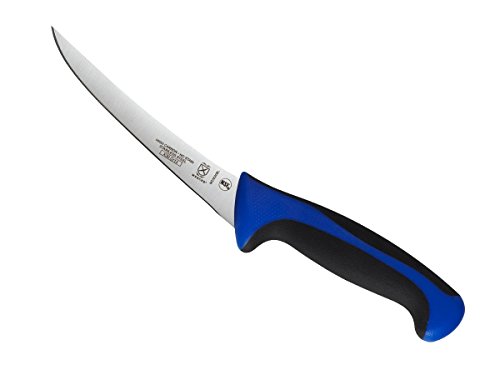
- Curved blade for meat, poultry, and fish
- Textured non-slip Santoprene handle
- Blue handle identifies seafood use
Best For: Routine deboning and seafood preparation
Versatile Semi-Stiff Pick – Victorinox Fibrox Pro Curved Boning Knife
For shoppers seeking a boning knife for meat that can handle both thick and delicate cuts, this Victorinox Fibrox Pro model offers a useful middle ground. Its 6-inch curved, semi-stiff stainless steel blade helps trim meat close to and around bones, while the pointed tip pierces meat cleanly.
Best For: Beef, pork, poultry, and general-purpose meat trimming where a little blade support is helpful.
Pros:
- Curved, semi-stiff blade provides a practical working angle around bones.
- Pointed tip and plain stainless steel edge support precise trimming.
- Textured Fibrox Pro handle is designed for a secure grip when wet.
- NSF standards compliance and a Victorinox lifetime warranty add confidence.
Cons:
- Semi-stiff construction may be less suited to very delicate cuts than a flexible blade.
- It is a single boning knife rather than a multi-knife set.
This is a strong all-around option if you want one boning knife for meat with more control than a highly flexible blade. Its curved profile and ergonomic handle make it especially practical for repeated trimming tasks.
BBQ Carving Set – Cutluxe Brisket Slicing and Boning Knife Set
This Cutluxe set gives BBQ cooks both a 6-inch curved boning knife and a 12-inch brisket slicing knife. As a boning knife for meat, the shorter blade is paired with a Granton edge intended to reduce friction and help keep meat from sticking during cutting.
Best For: BBQ enthusiasts who want one coordinated set for boning, brisket slicing, and serving preparation.
Pros:
- Includes both a 6-inch boning knife and a 12-inch slicing knife.
- Granton edges are designed to reduce friction and meat sticking.
- Full-tang ergonomic construction supports control and comfort.
- German steel construction comes with a lifetime warranty.
Cons:
- The set is larger and heavier than a standalone boning knife.
- The long slicing knife may be unnecessary if you only need to debone meat.
Choose this set when versatility matters more than minimal storage. It is particularly compelling for BBQ preparation because it combines meat trimming with brisket slicing in one purchase.
Flexible Precision Choice – Victorinox Fibrox Curved Boning Knife
If you need a boning knife for meat that can follow intricate contours, this Victorinox Fibrox model uses a 6-inch curved, flexible stainless steel blade. Its design is suited to thinner or more delicate cuts, including poultry and fish, where controlled movement around the bone matters.
Best For: Chicken, fish, and other tender or delicate cuts that benefit from a flexible blade.
Pros:
- Flexible curved blade is designed for delicate and intricate boning work.
- Textured Fibrox handle is slip resistant and ergonomically shaped.
- Swiss-made professional design is NSF approved.
- Victorinox provides a lifetime warranty against material and workmanship defects.
Cons:
- Flexible steel may provide less support for thick cuts than a semi-stiff blade.
- A sharpener is not included and is sold separately.
This knife is a focused choice for precision rather than heavy-duty rigidity. Its flexible profile makes it a particularly suitable tool when trimming close to bones in delicate meat or fish.
Commercial-Grade Value – Winco 6-Inch Red Boning Knife
Winco 6" Red Plastic Commercial-Grade Boning Knife | Razor sharp, Restaurant service
Check Price On AmazonFor a straightforward boning knife for meat, the Winco 6-inch model combines a razor-sharp X50 Cr MoV15 German steel blade with a practical red plastic handle. Its commercial-grade design is intended for removing meat from bones and repeated use in foodservice settings.
Best For: Home cooks or foodservice users who want a durable, easy-to-identify knife for routine meat deboning.
Pros:
- Razor-sharp German steel blade is designed for removing meat from bones.
- Finger indentations and a slip-resistant handle support extended use.
- Commercial-grade construction is intended for daily foodservice use.
- NSF listed for professional kitchen environments.
Cons:
- The plastic handle offers less premium feel than a wood or composite handle.
- It is a single-purpose knife without included accessories or additional blades.
This Winco is a practical pick when function, visibility, and commercial durability take priority. The red handle also makes it easy to distinguish from other kitchen tools during busy prep work.
Best Value Curved Boning Knife – Mercer Culinary Ultimate White 6-Inch
If you want a practical boning knife for meat, the Mercer Culinary Ultimate White combines a 6-inch curved blade with high-carbon Japanese steel. Its shape is suited to separating meat from bone and trimming fat or sinew, while the textured handle helps maintain a secure grip.
Best For: Home cooks and value-minded kitchens deboning chicken, ham, and fish or trimming meat.
Pros:
- High-carbon Japanese steel supports sharpness and easy edge maintenance.
- Curved 6-inch blade is designed for deboning and trimming.
- Textured polypropylene handle offers non-slip grip points and comfort.
- Lightweight 4.6-ounce stamped construction is easy to handle.
Cons:
- Hand washing and thorough drying are recommended.
- The stamped construction may appeal less to shoppers seeking a forged knife.
This is a straightforward, budget-conscious choice for everyday meat preparation. Its curved profile and grippy handle prioritize control, provided you follow the recommended hand-wash care routine.
Premium Forged Boning Knife – Cutluxe 6-Inch Razor Sharp
The Cutluxe is a premium boning knife for meat with a flexible 6-inch blade, a hand-sharpened 14–16-degree edge, and forged high-carbon German steel. Its full-tang pakkawood handle is built for stability during deboning, trimming, skinning, and butterflying.
Best For: Cooks who want a sharp, flexible knife for detailed meat and fish preparation with a full-tang handle.
Pros:
- Flexible blade supports filleting, deboning, trimming, skinning, and butterflying.
- Hand-sharpened edge is specified at 14–16 degrees per side.
- Forged high-carbon German steel is rated at 56+ Rockwell hardness.
- Triple-riveted pakkawood full-tang handle provides grip and stability.
Cons:
- Requires appropriate care to preserve the wood handle and blade.
- Its premium forged design may cost more than basic stamped alternatives.
Choose this model when edge sharpness, flexibility, and handle stability are priorities. The included lifetime warranty against material or workmanship defects adds reassurance for regular use.
Best Grip Curved Boning Knife – Mercer Culinary Millennia 6-Inch
For cooks seeking a dependable boning knife for meat, the Mercer Culinary Millennia offers a 6-inch curved blade made from high-carbon Japanese steel. Its Santoprene handle has textured finger points to support a comfortable, non-slip grip while separating meat from bone.
Best For: Home cooks and professional-style kitchens that want a lightweight curved knife for deboning and trimming.
Pros:
- One-piece high-carbon Japanese steel construction supports edge maintenance.
- Curved blade is suited to deboning chicken, ham, and fish.
- Textured Santoprene handle provides grip, comfort, and safety.
- Light 3.52-ounce design is easy to maneuver.
Cons:
- Mercer recommends hand washing and complete drying after use.
- Stamped construction is less suited to shoppers specifically seeking forged construction.
The Millennia is a focused, lightweight option for controlled trimming and bone separation. Its handle design is the main usability advantage, while the required hand care helps protect long-term performance.
Flexible German-Steel Pick – Cutluxe 6-Inch Curved Boning Knife
For shoppers seeking a boning knife for meat, the Cutluxe combines a flexible, curved 6-inch blade with a razor-sharp 14–16-degree-per-side edge. Its full-tang pakkawood handle is designed for controlled trimming, deboning, skinning, and butterflying.
Best For: Cooks who want a flexible boning knife for meat, poultry, and fish, along with a sturdy full-tang handle and included sheath.
Pros:
- Flexible curved blade suits trimming, filleting, and deboning.
- High-carbon German steel is rated at 56+ Rockwell hardness and is rust- and stain-resistant.
- Triple-riveted pakkawood handle provides stability and maneuverability.
- Includes a sheath and lifetime warranty against material or workmanship defects.
Cons:
- The pakkawood handle may require more care than a synthetic handle.
- Its curved, flexible profile may be less suitable for users seeking a rigid boning blade.
This is a well-rounded option for detailed meat preparation, especially when flexibility and handle control matter. The forged German-steel construction and warranty add reassurance for regular kitchen use.
Delicate Trimming Choice – Victorinox 6-Inch Curved Boning Knife
The Victorinox Wood boning knife is a practical boning knife for meat when narrow access and careful control are priorities. Its extra-narrow, semi-stiff, curved stainless-steel blade is suited to delicate trimming and deboning.
Best For: Home cooks and professionals who need an agile blade for precise meat trimming and deboning.
Pros:
- Extra-narrow, curved blade helps reach around bones and tight areas.
- Semi-stiff design balances precision with controlled movement.
- Wear-resistant stainless steel supports regular meat-preparation tasks.
- Natural wood handle offers an ergonomic grip.
Cons:
- The stamped construction is less substantial than a forged design.
- Natural wood may need more care than a synthetic handle.
- Its semi-stiff blade is not the best match for shoppers wanting maximum flexibility.
Choose this Victorinox when maneuverability is more important than heavy-duty construction. The narrow curved profile makes it especially appealing for delicate trimming and deboning work.
Color-Coded Workhorse – Mercer Millennia 6-Inch Boning Knife
The Mercer Millennia Colors is a practical boning knife for meat, poultry, and fish, with a 6-inch curved blade designed to separate meat from bone and trim fat or sinew. Its blue handle is color-coded for fish and seafood.
Best For: Cooks who want an easy-care, non-slip handle and a clearly identifiable knife for seafood and general deboning.
Pros:
- Curved 6-inch blade is suited to deboning chicken, ham, and fish.
- One-piece high-carbon Japanese steel supports edge maintenance and sharpness.
- Textured Santoprene handle offers non-slip finger points for comfort and control.
- Blue color coding helps identify the knife for fish and seafood.
Cons:
- Hand washing is recommended; it should not go in the dishwasher or remain submerged.
- Its stamped construction may appeal less to shoppers seeking a forged knife.
- The blue handle is specialized and may not suit every kitchen’s color-coding system.
This Mercer is a sensible workhorse for routine trimming and deboning. Its grippy handle and seafood-oriented blue color make it particularly useful in busy kitchens that value quick identification.
How We Picked the Best Boning Knife for Meat
We focused on knives with blades around 6 inches, a practical size for trimming roasts, poultry, fish, and smaller cuts of meat. The selection includes curved and straighter profiles, flexible and semi-stiff blades, textured commercial handles, and traditional wood designs.
Our comparison also considers handling, edge control, cleanup, intended workload, and the type of user each knife best serves. Since cutting technique and personal preference vary, there is no single best option for every kitchen.
Quick Comparison
| Best For | Look For | Recommended Type |
|---|---|---|
| General meat prep | Balanced blade and comfortable grip | Curved semi-stiff knife |
| Removing meat from bones | Controlled flex and narrow profile | Flexible boning or fillet knife |
| Brisket and BBQ | Longer slicing capability and trimming control | Carving and boning set |
| Commercial or frequent use | Durable handle and easy sanitation | Commercial-grade plastic-handle model |
| Traditional kitchen use | Comfortable shape and attractive materials | Wood-handle semi-stiff knife |
Key Buying Factors for a Boning Knife for Meat
Blade Flexibility
Flexible blades follow bones and work well for poultry, fish, and detailed trimming. Semi-stiff blades provide more support for larger cuts, connective tissue, and heavier portions. If you want one versatile Boning Knife for Meat, moderate flex is often the safest starting point.
Blade Shape and Length
A curved blade can improve leverage and help guide cuts around joints. A narrower, straighter blade offers precise control in tight areas. Six inches is a useful all-purpose length, while longer carving-focused designs can help with brisket and larger roasts.
Handle and Hygiene
Choose a handle that stays secure when wet or greasy. Textured synthetic handles are practical for frequent prep and are generally easier to sanitize than wood. Wood can feel warm and traditional, but it usually requires more careful cleaning and drying.
Maintenance and Safety
A sharp edge is safer and more efficient than a dull one, so confirm that the knife can be honed or sharpened with your existing tools. Hand washing is commonly recommended for quality kitchen knives, even when a manufacturer lists dishwasher compatibility.
Who Should Buy Which Boning Knife for Meat?
Choose a flexible model if you mainly debone poultry, work around joints, or prepare fish. Choose a semi-stiff curved knife for general-purpose trimming, steaks, roasts, and larger meat cuts. Choose a BBQ-oriented set if brisket slicing and trimming are equally important.
For high-volume prep, prioritize a durable, slip-resistant commercial handle and easy cleanup. For occasional home use, focus on comfortable balance and a reliable edge rather than extra accessories. Hunters and cooks processing varied cuts may prefer a versatile 6-inch blade that offers enough flex for precision without feeling delicate.