Artisan baking rewards precision, but rolling dough by hand can make consistency difficult—especially when working with laminated pastry, pizza dough, fondant, or repeated batches. The right dough sheeter can reduce effort while helping you achieve more uniform thickness.
We selected 10 models spanning compact countertop machines, foldable manual designs, and wider electric sheeters. Use the guide below to match capacity, adjustment range, workspace, and power requirements to the way you bake.
Best 10 Dough Sheeters for Artisan Baking Picks for 2026
Best Foldable Manual Option
Adjustable Commercial Dough Sheeter

- No electricity required
- Folds for compact storage
- Handles pastry, pizza dough, and fondant
Best For: Portable home and small-batch baking
Best 12-Inch Countertop Pick
Folding Stainless Steel Dough Sheeter

- 12-inch rolling width
- Stable non-slip base
- Adjustable manual thickness control
Best For: Home and small-business countertop use
Best Electric Workhorse
22.7-Inch Commercial Dough Sheeter

- Electric, low-effort operation
- 2–30 mm thickness range
- 304 stainless-steel construction
Best For: Frequent batch work in bakeries and pizza shops
Best Compact Manual Sheeter

- 0–12 mm adjustable thickness
- Removable parts ease cleaning
- Compact stainless-steel countertop design
Best For: Home and small commercial pastry work
Commercial Powerhouse
48-Inch Electric Dough Sheeter
- Electric, hands-free operation for higher throughput
- 2–30 mm adjustable thickness range
- Stainless steel body with food-grade PE board
Best For: Professional bakeries and high-volume pastry production
Space-Saving Workhorse

- Foldable design suits limited storage areas
- Stainless steel body and stable frame
- Works with pastries, pizza, noodles, cookies, and pie dough
Best For: Home bakers and small commercial kitchens
Compact Versatility
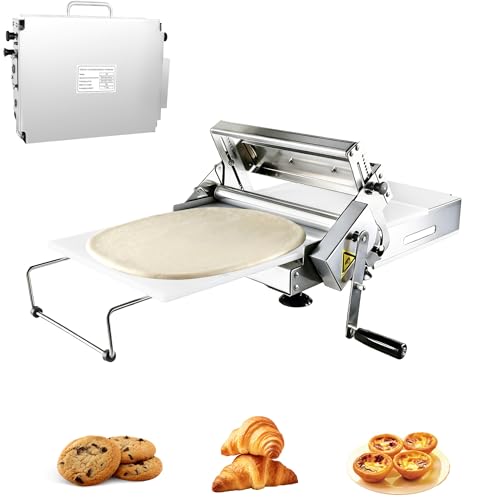
- 0.2–27 mm adjustable thickness control
- Foldable countertop design with mobility wheels
- Includes board, tools, lattice, and pin accessories
Best For: Home kitchens and compact commercial workspaces
Heavy-Duty Electric Pick
Commercial Dough Roller Sheeter

- 2.2kW electric motor with stated 80kg/h capacity
- 1–20mm thickness adjustment and 300mm roller
- Built for bakeries, restaurants, and noodle shops
Best For: High-volume kitchens needing powered dough rolling
Space-Saving Manual Pick

- Folds for easier storage in compact kitchens
- 55 settings from 0 to 27mm
- Manual, electricity-free operation
Best For: Home bakers and small catering spaces
Wide-Range Folding Pick

- 56 settings from 0 to 25mm
- Folds to 18.5 x 11.8 inches for storage
- Wide working format for pastry and pizza dough
Best For: Small bakeries and home kitchens needing fine control
Best Foldable Manual Option – Adjustable Commercial Dough Sheeter
For bakers comparing dough sheeters for artisan baking, this foldable manual model emphasizes portability, adjustable thickness, and broad dough-handling versatility. It works without electricity and folds down for storage, making it practical for kitchens with limited space.
Best For: Home bakers, camping setups, and small pastry operations that need a versatile, storable sheeter.
Pros:
- Manual operation requires no electricity and includes ergonomic handles.
- Adjustable settings cover an advertised 0–25 mm range for pastry, pizza dough, fondant, and more.
- Foldable design and non-slip base support compact storage and stable use.
- Stainless steel and food-grade components are designed for straightforward cleaning.
Cons:
- Manual cranking requires more effort than an electric machine.
- The supplied specifications describe multiple size and thickness figures, so buyers should verify the exact variant.
This is a flexible choice when storage space and portability matter as much as dough consistency. Its manual format suits occasional and small-batch artisan baking better than high-volume production.
Best 12-Inch Countertop Pick – Folding Stainless Steel Dough Sheeter
This 12-inch countertop model is a practical contender among dough sheeters for artisan baking, combining a hand crank, adjustable thickness control, and a wide dough board. Its folding construction is aimed at home kitchens, cafés, pizzerias, and small bakeries.
Best For: Home bakers and small businesses seeking a stable manual sheeter for recurring pastry and pizza preparation.
Pros:
- 12-inch working width and wide board are designed for even rolling in one pass.
- Adjustable knob supports different dough thicknesses and recipes.
- Non-slip feet and a sturdy base help reduce vibration during use.
- Detachable construction and damp-cloth cleaning simplify maintenance.
Cons:
- At 27 pounds, it is less portable than lighter folding models.
- Manual operation may be slower or more tiring for large production runs.
With its countertop footprint and stability-focused base, this sheeter fits bakers who want repeatable results without moving to an electric machine. It offers useful versatility for laminated dough, pizza, tortillas, fondant, and pastry.
Best Electric Workhorse – 22.7-Inch Commercial Dough Sheeter
For high-efficiency dough sheeters for artisan baking, this electric model reduces manual effort while providing adjustable thickness from 2 to 30 mm. Its 22.7-inch format and stainless-steel construction suit bakeries, pizza shops, restaurants, and home kitchens with suitable counter space.
Best For: Bakers who prioritize faster, lower-effort rolling for pizza, croissants, puff pastry, pasta, and empanadas.
Pros:
- Electric operation reduces physical strain and supports efficient preparation.
- 2–30 mm thickness adjustment accommodates a broad range of recipes.
- 304 stainless steel is described as food-safe, rust-resistant, and easy to clean.
- Foldable construction helps improve storage efficiency.
Cons:
- Requires access to electricity, unlike the manual alternatives.
- The larger 22.7-inch format may need more dedicated workspace.
This is the strongest fit for bakers handling frequent batches or wider sheets and wanting consistent results with less hand cranking. Its electric design is less convenient for off-grid or highly portable baking.
Best Compact Manual Sheeter – VEVOR 11-Inch Pastry Roller
This compact VEVOR model is a straightforward option among dough sheeters for artisan baking, offering manual control, a readable adjustment dial, and thickness settings from 0 to 12 mm. Its countertop design accommodates pastry, fondant, pasta, pizza, and croissant dough.
Best For: Home kitchens, cafés, and small commercial operations needing a compact manual roller with removable parts.
Pros:
- Manual operation needs no electricity and allows repeated rolling for texture control.
- Readable dial provides adjustment from 0 to 12 mm.
- Removable handle, panel, and roller support storage and cleaning.
- Stainless-steel construction and a fixed base promote durability and stability.
Cons:
- Its maximum listed thickness is 0.5 inch, or 12 mm, which may not suit thicker dough applications.
- Manual cranking is less efficient for high-volume production.
This sheeter balances a relatively compact footprint with useful adjustment and removable components. It is a sensible choice for smaller batches, decorative pastry work, and bakers who prefer an electric-free setup.
Commercial Powerhouse – 48-Inch Electric Dough Sheeter
For bakeries needing high-volume output, this electric option stands out among dough sheeters for artisan baking. Its stainless steel construction, integrated PE rolling board, and broad 2–30 mm thickness range support consistent preparation across laminated doughs, pastry, pizza, pasta, fondant, and more.
Best For: Professional bakeries, pastry shops, cafés, and other commercial kitchens that prioritize hands-free operation and a wide working surface.
Pros:
- Electric operation reduces the effort of repeated manual rolling.
- Adjustable 2–30 mm thickness range accommodates many dough styles.
- Stainless steel body and food-grade PE board are designed for frequent use.
- Detachable construction supports easier assembly, cleaning, and storage.
Cons:
- Its 48-inch footprint may be too large for compact kitchens.
- Electric operation requires a suitable power setup.
This is the most production-oriented choice in the group, especially when speed, repeatable thickness, and a spacious rolling area matter more than portability.
Space-Saving Workhorse – Foldable Manual Dough Sheeter
This manual model is a practical pick among dough sheeters for artisan baking when durability and storage flexibility are priorities. Its stainless steel body, stable frame, and foldable design make it suitable for working with croissants, pastries, pizza dough, noodles, cookies, and pie crusts.
Best For: Home bakers and small commercial kitchens that need a versatile sheeter without committing to a permanent countertop setup.
Pros:
- Foldable design helps conserve countertop and cabinet space.
- Stainless steel construction is intended to resist rust and withstand regular use.
- Handles a broad range of dough types, from pizza dough to cookie dough.
- Tool-free disassembly and an integrated design simplify cleaning.
Cons:
- Manual operation requires more hands-on effort than an electric sheeter.
- The supplied notes do not specify an adjustable thickness range.
Choose this model if you want a sturdy, broadly capable manual machine that can be folded away after use and transported without complicated setup.
Compact Versatility – 12-Inch Manual Dough Sheeter
For smaller workspaces, this compact machine offers a flexible approach to dough sheeters for artisan baking. The manual stainless steel unit supports thickness adjustment from 0.2 to 27 mm and includes a foldable structure, board, tools, lattice, and pin accessories for varied baking tasks.
Best For: Home kitchens and countertop-focused commercial setups making pizza, pasta, egg rolls, and layered pastries.
Pros:
- Adjustable 0.2–27 mm thickness range supports thin and thick applications.
- Foldable countertop design helps save storage space.
- Stainless steel construction and roller are suited to repeated dough preparation.
- Wheels support mobility, while included accessories add shaping flexibility.
Cons:
- Its 12-inch format offers less working width than larger sheeters.
- Manual operation may be slower or more labor-intensive for large batches.
This model makes the most sense when countertop space is limited but you still want substantial thickness control and accessories for different dough-forming jobs.
Heavy-Duty Electric Pick – Commercial Dough Roller Sheeter
For bakeries and other high-volume kitchens, this electric model is one of the more powerful dough sheeters for artisan baking. Its 2.2kW, 110V motor, 300mm roller, adjustable 1–20mm thickness range, and stated 80kg/h capacity are designed for frequent pastry, pizza, pasta, and dough preparation.
Best For: Commercial bakeries, restaurants, cake shops, and noodle shops that need powered, high-throughput rolling.
Pros:
- Electric motor supports a stated capacity of up to 80kg/h.
- Adjustable thickness from 1–20mm suits pizza, pastry, croissants, pies, and pasta.
- Waterproof power switch, sprocket drive, and stainless-steel roller construction support commercial use.
- Designed for disassembly and cleaning.
Cons:
- At 158.7 pounds, it is substantially less portable than manual models.
- The 18.5 x 20.47 x 15.75-inch footprint requires dedicated counter or floor space.
- Its electric design is more involved than a hand-operated sheeter.
This is the strongest fit when production volume and consistent powered rolling matter more than portability. Confirm your available space and electrical setup before buying.
Space-Saving Manual Pick – Folding Dough Sheeter
This folding manual machine is a practical option for home cooks and small food businesses comparing dough sheeters for artisan baking. It uses no electricity, folds for storage, and offers 55 thickness settings from 0 to 27mm for doughs ranging from pizza and cookies to Danish-style pastry.
Best For: Home kitchens and small catering operations that need broad thickness control without dedicating permanent counter space.
Pros:
- Folding design helps conserve kitchen storage space.
- Offers 55 adjustable settings across a 0–27mm range.
- Manual operation avoids electricity use and remains usable during power outages.
- Food-grade stainless-steel dough-contact parts are designed for hygiene and easy cleaning.
Cons:
- Manual rolling requires more user involvement than an electric sheeter.
- The supplied notes do not state a production capacity.
- Its 15.5-inch rolling width may be limiting for larger batches or wide dough sheets.
Choose this model when compact storage, flexible thickness adjustment, and electricity-free operation are priorities. It is better suited to smaller-scale work than demanding commercial volume.
Wide-Range Folding Pick – 400B Manual Dough Sheeter
With a wide 40.5-inch working size and 56 fine adjustments, this model gives bakers a versatile manual option among dough sheeters for artisan baking. It folds to 18.5 x 11.8 inches for storage and is intended for pizza, puff pastry, croissants, cookies, fondant, and other doughs.
Best For: Home kitchens, small bakeries, cafés, and pastry shops wanting a foldable sheeter with fine thickness control.
Pros:
- Provides 56 settings from 0 to 25mm with 0.5mm adjustment increments.
- Folds substantially smaller for storage when not in use.
- Manual operation requires no electricity and uses a 360-degree handle with a smooth gear system.
- Food-grade stainless-steel contact parts and an oxidation-resistant surface are designed for easier maintenance.
Cons:
- Manual operation may be less convenient for sustained, high-volume production.
- The 40.5 x 22.8-inch operating size needs considerable setup space.
- The supplied notes do not provide a rolling capacity.
This is a flexible middle-ground choice for users who need a generous working surface but cannot leave a full-size machine assembled. Measure both your operating and folded storage areas before purchasing.
How We Picked the Best Dough Sheeters for Artisan Baking
We compared these machines by the features that matter most in an artisan kitchen: thickness adjustment, roller width, construction, operating style, storage convenience, and suitability for different dough types. Manual models can offer excellent control without requiring an outlet, while electric sheeters are better suited to frequent production and larger batches.
We also considered whether each design makes sense for home bakers, serious enthusiasts, small bakeries, or commercial prep areas. A larger machine is not automatically better; it must fit your available counter space and the size of dough you typically prepare.
Quick Comparison
- Best for compact workspaces: Choose a 11- or 12-inch countertop manual model.
- Best for frequent batches: An electric sheeter can reduce repetitive hand rolling.
- Best for flexible storage: Look for a foldable frame or folding worktable.
- Best for wide dough sheets: Consider a 40-inch-plus machine, provided you have sufficient clearance.
- Best for maximum versatility: Prioritize broad thickness adjustment and reversible or adjustable rollers.
Key Buying Factors for Dough Sheeters for Artisan Baking
Roller Width and Workspace
Roller width determines how much dough you can process in one pass. Compact 11- or 12-inch machines are easier to store and suit home baking, while wider models are more practical for pastry production and larger pizza or fondant sheets. Measure both the machine and the space needed to feed and collect dough.
Thickness Range and Adjustment
Fine, repeatable adjustment is essential for laminated pastry, cookies, noodles, pizza, and fondant. A broad range is useful, but the adjustment mechanism should also feel stable and easy to set. Check whether the listed range refers to the final gap and whether settings can be changed quickly between batches.
Manual Versus Electric Operation
Manual sheeters are usually simpler, quieter, and easier to place in a home kitchen. They require more physical effort, particularly with stiff dough. Electric models improve throughput and consistency but need a suitable outlet, more counter space, and careful attention to motor capacity and cleaning instructions.
Build Quality and Maintenance
Stainless steel construction is valuable for durability and sanitation, while food-contact surfaces should be easy to wipe clean. Avoid immersing powered components, and confirm that rollers, scrapers, and boards can be cleaned according to the manufacturer’s instructions.
Who Should Buy Which Dough Sheeters for Artisan Baking?
Home bakers and beginners should start with a compact manual sheeter that offers useful adjustment and folds away when not in use. Serious hobbyists may prefer a wider manual or tabletop electric model for better repeatability without committing to a full commercial setup. Small bakeries and high-volume users should focus on electric machines with broad rollers, durable stainless construction, and a thickness range suited to their main products. Before buying, confirm dimensions, voltage, included accessories, weight, and return support.