Large pastry runs demand more than a dependable rolling pin. The best dough sheeters for large batches help bakeries produce consistent thickness, reduce manual effort, and move laminated dough through prep more efficiently.
This roundup compares manual and electric models across working width, adjustment range, construction, operating style, and space requirements. Use the guide below to match a sheeter to your production volume, dough types, and available workspace.
Best 10 Dough Sheeters for Large Batches Picks for 2026
Flexible Stainless Steel Pick

- Wide tabletop format for substantial dough sheets
- Adjustable 2–25 mm thickness control
- Folds for more compact storage
Best For: Manual pizza, pastry, bread, and cookie preparation
Fast Production Pick
22.7-Inch Electric Dough Sheeter
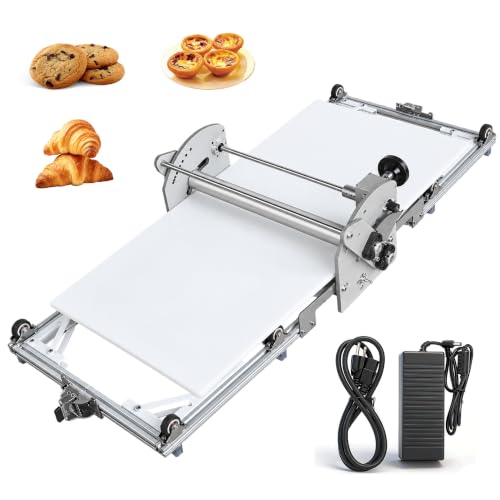
- Automatic rolling reduces repetitive hand work
- Adjusts from 2 to 30 mm
- Detachable design helps with storage
Best For: Powered prep in bakeries, cafés, and small food businesses
Precision Manual Pick
Foldable Commercial Tabletop Sheeter

- Fine 0.5 mm adjustment increments
- Manual operation needs no electricity
- Folds down for compact storage
Best For: Precise manual rolling across bakery and pizza-shop recipes
Compact Electric Pick

- 250W motor reduces manual rolling
- 0.4–4 mm control for thin sheets
- Designed for 50–500 g portions
Best For: Home and light pastry prep in compact workspaces
Best Commercial Electric Pick
VEVOR 15.7-Inch Reversible Dough Sheeter

- Automatic motorized operation
- 0–35 mm thickness adjustment
- Folding reversible conveyor
Best For: Bakeries and professional pastry kitchens
Best for Everyday Use
Japan Kneader 21.6-Inch Dough Sheeter

- Handles up to 4.4 pounds of dough
- 65 thickness settings
- Folding design with five-year warranty
Best For: Home bakers and micro-bakeries
Best Compact Manual Value
40.5-Inch Foldable Stainless Dough Sheeter

- Foldable for compact storage
- 304 stainless steel construction
- 2–30 mm geared adjustment
Best For: Home bakers and space-conscious small kitchens
High-Output Electric Pick
22.7" Commercial Electric Dough Sheeter

- Electric rolling for lower manual effort
- 2–30 mm adjustable thickness range
- Foldable 304 stainless-steel countertop design
Best For: Bakeries, pizza shops, and pastry production
Manual Batch-Friendly Value
VEVOR 11" Manual Dough Sheeter

- No-electricity manual operation
- 0–12 mm adjustable thickness
- Removable parts aid cleaning and storage
Best For: Small commercial kitchens and countertop batch work
Portable Artisan Choice
Brod & Taylor Manual Countertop Sheeter

- 0–26 mm range for thin to thick dough
- Fine 1 mm adjustments from 0–6 mm
- Includes reversible board and carrying case
Best For: Home bakers and micro-bakeries needing versatile manual sheeting
Flexible Stainless Steel Pick – Folding Manual Dough Sheeter
For bakers comparing dough sheeters for large batches, this manual model offers a wide 40.5-inch-by-22.8-inch format, adjustable thickness control, and a foldable design. Its stainless steel construction and hand-crank operation suit users who want consistent rolling without relying on electricity.
Best For: Home bakers, pastry prep areas, and small bakeries needing a foldable manual sheeter for pizza, pastries, bread, and cookies.
Pros:
- Adjustable thickness range supports sheets from 2 to 25 mm, with listed specifications extending to 30 mm.
- Stainless steel frame and polished roller surface are designed for durability and easier cleanup.
- Foldable structure helps reduce storage demands when not in use.
- Manual crank and tabletop design require no electrical connection.
Cons:
- Manual operation requires more hands-on effort than an electric sheeter.
- Its large operating footprint may need substantial counter space.
This is a practical choice when storage flexibility and broad thickness adjustment matter more than automated throughput. The foldable frame makes it easier to accommodate in a busy kitchen between production runs.
Fast Production Pick – 22.7-Inch Electric Dough Sheeter
Among dough sheeters for large batches, this electric model is aimed at faster, more consistent rolling with less manual effort. Its adjustable 2–30 mm range and stainless steel construction make it adaptable for several dough styles in home or small commercial settings.
Best For: Bakeries, cafés, small food businesses, and home users who prioritize powered rolling for croissants, pizza, pastry, cookies, or pasta.
Pros:
- Automatic operation helps produce even sheets more quickly than hand rolling.
- Thickness adjusts from 2 to 30 mm for a range of recipes.
- Stainless steel body and food-grade rollers are designed for durability and rust resistance.
- Detachable, space-saving construction simplifies assembly and storage.
Cons:
- Powered operation requires access to an electrical outlet.
- The supplied notes do not specify motor power or roller width beyond the 22.7-inch product designation.
This model is the stronger fit for users who want repeatable powered rolling and a versatile thickness range. Its detachable design is useful when countertop space is limited between batches.
Precision Manual Pick – Foldable Commercial Tabletop Sheeter
For dough sheeters for large batches that still need manual control, this foldable tabletop roller offers dual-sided adjustment in increments as fine as 0.5 mm. Its large operating format and broad recipe compatibility make it suitable for pizza, laminated pastry, pasta, dumpling wrappers, and more.
Best For: Home kitchens, bakeries, restaurants, and pizza shops that want precise manual thickness control with compact folded storage.
Pros:
- 0–25 mm thickness control with fine 0.5 mm adjustment increments supports uniform sheets.
- Manual crank operation requires no electricity and provides direct rolling control.
- Folds from approximately 40.6 by 22.8 by 15.7 inches to 18.5 by 11.8 by 4.7 inches.
- Alloy and stainless steel construction is designed for strength and easier cleaning.
Cons:
- Manual cranking may be less efficient for extended production than an electric model.
- The expanded working size requires considerable counter space during use.
This sheeter stands out for users who value precise incremental adjustments and do not want an electric appliance. The substantial size supports larger work sessions, while the folded dimensions improve storage flexibility.
Compact Electric Pick – Small-Batch Pastry Sheeter
Although designed for smaller portions, this compact electric unit can complement dough sheeters for large batches when a kitchen needs a secondary machine for pastry prep. Its 250W motor, 15.7-inch rolling area, and 0.4–4 mm adjustment range target thinner sheets and batches from 50 to 500 g.
Best For: Home bakers and small bakery workspaces preparing individual portions of pastry, pizza, pie crust, and laminated dough.
Pros:
- Electric 250W motor reduces repetitive hand rolling for small portions.
- 0.4–4 mm control is suited to thin pastry sheets and other delicate preparations.
- 304 stainless steel rollers and feeding tray provide a smooth, wipe-clean work surface.
- Non-slip feet and a 5.9-foot power cord support stable, flexible countertop placement.
Cons:
- It is recommended for 50–500 g portions, so it is not intended as a primary large-batch machine.
- Continuous operation is limited to 30 minutes before a 10–15 minute cooling period.
- The 15.7-inch rolling width is narrower than the larger sheeters in this roundup.
This is best viewed as a compact powered option for light production rather than a high-throughput large-batch workhorse. Its narrow thickness range and portion guidance make it especially appropriate for pastry-focused prep.
Best Commercial Electric Pick – VEVOR 15.7-Inch Reversible Dough Sheeter
For bakeries comparing dough sheeters for large batches, the VEVOR SPL380 emphasizes powered operation, a wide 15.7-inch conveyor, and reversible rolling. Its stainless steel build and adjustable range suit repeated pastry production where consistent handling and reduced manual lifting matter.
Best For: Bakeries, patisseries, hotel kitchens, and other professional settings making puff pastry and similar doughs.
Pros:
- Automatic operation with a powerful motor for efficient rolling.
- Reversible conveyor lets you press dough back and forth without moving it manually.
- Thickness adjusts from 0 to 35 mm for different dough applications.
- Folding conveyor, protective mesh cover, and rubber feet add practical usability.
Cons:
- At 253.5 pounds, it is substantially heavier than the manual alternatives.
- Its 63.39-inch length requires considerable floor space when set up.
- The powered commercial design may be more machine than occasional home bakers need.
The VEVOR is the strongest production-oriented option here, especially when throughput and hands-free reversing outweigh portability. Measure your workspace carefully and plan for its substantial weight.
Best for Everyday Use – Japan Kneader 21.6-Inch Dough Sheeter
The Japan Kneader is a practical choice for shoppers seeking dough sheeters for large batches without moving to a heavy electric machine. Its 21.6-inch double-sided board, manual operation, and 65 thickness settings provide fine control for laminated pastries and smaller commercial or serious home batches.
Best For: Home bakers and micro-bakeries producing croissants, Danish pastry, puff pastry, pizza, or pasta dough.
Pros:
- Handles up to 2 kg, or 4.4 pounds, of dough at once.
- Offers 65 adjustment settings from 0 to 32 mm for detailed thickness control.
- Wide double-sided board supports rolling and cutting.
- Folds for storage, has a detachable roller, and includes a five-year home or commercial warranty.
Cons:
- Manual operation requires more physical effort than an electric sheeter.
- Its stated capacity is smaller than what some high-volume bakeries may require.
- The product weighs 35 pounds, so it is portable relative to commercial machines but not lightweight.
This model balances batch capacity, precise adjustment, and a compact folding design. It is particularly appealing when lamination consistency matters but your operation does not need a powered floor-standing machine.
Best Compact Manual Value – 40.5-Inch Foldable Stainless Dough Sheeter
For home kitchens and smaller work areas, this manual model offers a straightforward way to manage dough sheeters for large batches without committing to a powered commercial unit. The hand crank, foldable frame, and 304 stainless steel construction prioritize simple operation, cleanup, and storage.
Best For: Home bakers and small kitchens making croissants, egg tarts, pizza crusts, and other rolled pastries.
Pros:
- Foldable design stores compactly when not in use.
- 304 stainless steel construction is food-grade, hygienic, and easy to rinse clean.
- Manual crank rolls dough evenly with less effort than traditional hand rolling.
- Adjustable gears cover thicknesses from 2 to 30 mm.
Cons:
- Manual cranking is less convenient for continuous high-volume production than powered operation.
- The thickness range does not reach the zero-millimeter setting offered by the Japan Kneader.
- The supplied notes do not specify a maximum dough-weight capacity.
This is the most storage-friendly option of the three and a sensible fit for occasional or small-batch pastry work. Buyers planning sustained commercial production should consider whether manual operation and the unspecified capacity meet their workflow.
High-Output Electric Pick – 22.7" Commercial Electric Dough Sheeter
For bakeries, pizza shops, and pastry operations comparing dough sheeters for large batches, this electric model emphasizes consistent rolling with minimal manual effort. Its 2–30 mm adjustment range accommodates pizza dough, laminated pastries, pasta, and empanadas, while the foldable countertop design helps manage storage.
Best For: Commercial kitchens that want electric assistance, broad thickness control, and a stainless-steel construction.
Pros:
- Electric operation reduces repeated manual rolling and physical strain.
- Adjusts from 2 to 30 mm for varied dough and pastry applications.
- 304 stainless-steel construction is food-safe, rust-resistant, and easy to clean.
- Foldable countertop design improves storage efficiency.
Cons:
- At 52 pounds, it is less convenient to move than a lighter manual model.
- The larger commercial design may be more machine than occasional home bakers need.
Choose this sheeter when throughput and reduced hands-on effort matter more than portability. It is the strongest fit here for users seeking an electric solution for recurring, larger-volume preparation.
Manual Batch-Friendly Value – VEVOR 11" Manual Dough Sheeter
This VEVOR model is a practical option among dough sheeters for large batches when electricity is unavailable or a straightforward manual workflow is preferred. Its widened inlet and outlet support larger dough portions, while the 0–12 mm range handles pastry, fondant, pasta, and pizza preparation.
Best For: Small commercial kitchens, bakeries, coffee shops, and home users who want a compact manual machine.
Pros:
- Manual operation requires no electricity and allows repeated pressing for texture control.
- Readable adjustment dial supports thickness settings from 0 to 12 mm.
- Removable handle, panel, and roller simplify cleaning and storage.
- Stainless-steel body and fixed base support stable, durable use.
Cons:
- Turning the handle requires more physical effort than an electric sheeter.
- Its 11-inch working format is narrower than the 22.7-inch electric model.
- Manual operation may be slower for very high-volume production.
With a 23.2-pound build and compact countertop dimensions, this is easier to position than a heavier electric unit. It suits users who value serviceability, no-plug operation, and batch-friendly feeding over maximum automation.
Portable Artisan Choice – Brod & Taylor Manual Countertop Sheeter
For bakers seeking dough sheeters for large batches without committing to a bulky electric machine, the Brod & Taylor offers guided manual sheeting on a compact countertop setup. Its 0–26 mm range covers ultra-thin pastry through thicker pizza dough, with fine adjustments for more controlled results.
Best For: Home bakers and micro-bakeries making laminated pastries, pizza, cookies, crackers, and fondant.
Pros:
- Wide 0–26 mm thickness range handles diverse baking projects.
- Fine 1 mm adjustments from 0–6 mm improve control for thin pastry.
- Includes a reversible non-stick rolling and rigid cutting board.
- Carrying case supports storage and transport.
Cons:
- Manual operation still requires user effort for larger production runs.
- The 16-inch size may provide less working width than a larger commercial electric machine.
- Its included board and accessories may require more setup than a dedicated production line.
This model balances versatility and portability, especially for smaller operations that need to switch between delicate pastry and thicker dough. The carrying case and no-electricity setup make it particularly convenient where workspace and storage are limited.
How We Picked the Best Dough Sheeters for Large Batches
We focused on the factors that have the greatest effect on commercial pastry workflow: working width, thickness adjustment, roller design, drive type, reversibility, construction, portability, and cleaning access. The selection includes foldable tabletop machines, manual laminators, and electric sheeters so different bakeries can compare practical options rather than one-size-fits-all equipment.
Electric models generally suit repeated production with less operator effort, while manual units can offer simpler controls, lower operating complexity, and easier placement in smaller kitchens. Product specifications should be confirmed before purchase, especially voltage, usable roller width, minimum and maximum thickness, and recommended dough capacity.
Quick Comparison
| Best for | What to prioritize | Likely fit |
|---|---|---|
| High-volume daily production | Electric drive, reversible rollers, sturdy stainless construction | Commercial electric sheeters |
| Flexible bakery prep | Wide rollers, adjustable thickness, folding or movable design | Full-size tabletop models |
| Lower-volume professional use | Manual control, compact footprint, easy setup | Manual countertop sheeters |
| Limited workspace | Foldable frame, manageable weight, accessible controls | Folding tabletop machines |
| Pastry and fondant work | Fine adjustment and smooth roller surfaces | Precision manual laminators |
Key Buying Factors for Dough Sheeters for Large Batches
Working Width and Batch Size
A wider roller can process more dough per pass, which matters for pastry sheets, pizza dough, pasta, and laminated products. Measure doorways, counters, and storage areas as carefully as the listed width. A large machine is only useful if staff can load and unload it safely.
Manual Versus Electric Operation
Manual sheeters are often appropriate when production is intermittent or operators need direct control. Electric models are better suited to repeated batches because they reduce cranking and can maintain a steadier pace. Check motor power, duty expectations, controls, and whether the machine supports forward and reverse movement.
Thickness Adjustment
Look for a clearly marked adjustment system with a range that matches your recipes. Fine control is important for croissants, puff pastry, cookies, dumpling wrappers, and fondant. Consistent settings also make staff training and repeat production easier.
Construction, Cleaning, and Safety
Stainless steel surfaces are useful in busy food-preparation areas, but seams, guards, scrapers, and roller access also affect cleanup. Prefer stable frames, nonslip feet, protected moving parts, and emergency or accessible stop controls where offered. Confirm the machine’s electrical requirements before installation.
Who Should Buy Which Dough Sheeters for Large Batches?
Choose a wide electric model if your bakery runs frequent, demanding batches and labor savings justify a larger investment. Choose a foldable commercial tabletop unit if you need broad capacity but must reclaim counter space after service. A manual sheeter is a sensible choice for smaller bakeries, culinary programs, or operations that value mechanical simplicity. For the most compact work areas, prioritize a narrow countertop model with dependable thickness control rather than maximum width.