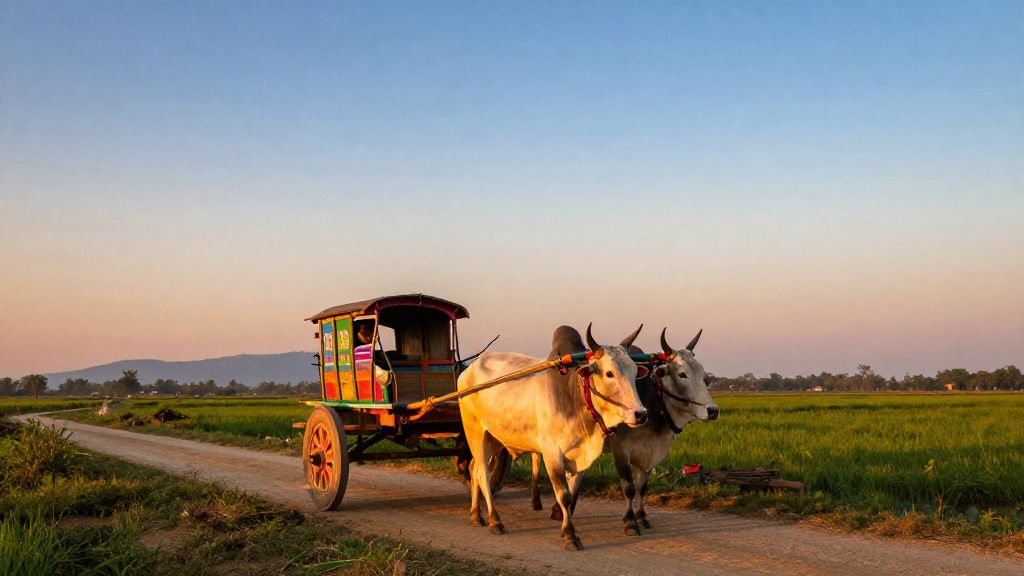
Indian bullock carts are traditional wooden vehicles powered by bullocks, playing a vital role in India’s agricultural landscape and rural economy.
These carts symbolize a deep-rooted culture and history, and their significance extends beyond mere transportation.
What Are the Key Features of Indian Bullock Carts?
Indian bullock carts come in various designs, primarily tailored to meet the needs of farmers.
Some of the notable features include:
- Construction Material: Typically made from wood, often using local species such as sal, teak, or mango.
- Design: Generally rectangular with a flatbed to carry goods or people.
- Wheels: Two large wooden wheels, with some modern variants incorporating metallic rims for durability.
- Animal Harness: Designed to attach a pair of bullocks comfortably, leaving them free to move yet securely harnessed.
These carts vary in regions across India, each reflecting local customs and requirements.
How Do Indian Bullock Carts Contribute to Agriculture?
The significance of Indian bullock carts in agriculture cannot be overstated.
They serve a multitude of purposes, including:
- Transportation of Goods: Farmers use these carts to transport agricultural produce from the fields to local markets.
- Plowing Fields: Many bullock carts can be converted into plowing equipment, aiding in soil cultivation.
- Movement of Inputs: Farmers also utilize them for carrying fertilizers, seeds, and other essential inputs.
In regions where mechanization is limited, the bullock cart remains an indispensable asset for many farmers, helping them to sustain their livelihoods.
What Is the Historical Background of Indian Bullock Carts?
The history of Indian bullock carts dates back thousands of years.
Archaeological finds indicate that these carts were likely used even in ancient times for trade and commerce.
Historically, they have played a role in:
- Trade Routes: Connecting different regions for commerce and cultural exchange.
- Religious Festivals: Often featured in processions and festivals, showcasing their cultural significance.
- Social Gatherings: Used for transporting people to weddings or festivities.
As a symbol of rural life, the Indian bullock cart has been celebrated in various art forms, literature, and folklore.
How Are Indian Bullock Carts Adapted for Modern Uses?
Despite their traditional roots, Indian bullock carts have adapted to modern needs.
Innovations and changes include:
- Enhanced Design: Modern bullock carts are sometimes equipped with durable materials and better harnessing systems.
- Multi-purpose Use: They now serve various functions beyond agriculture, such as tourism and heritage showcases.
- Eco-Friendly Transportation: With increasing awareness of sustainability, many are promoting bullock carts as an eco-friendly alternative for short-distance transport.
These adaptations showcase the resilience of Indian bullock carts, ensuring their relevance even in a rapidly changing world.
What Challenges Do Indian Bullock Carts Face Today?
While Indian bullock carts hold historical and cultural significance, they face certain challenges, including:
- Technology Advancements: The proliferation of motor vehicles has made transportation more efficient and quicker, diminishing the reliance on bullock carts in certain regions.
- Urbanization: Increasing urbanization leads to fewer rural spaces where bullock carts are needed or practical.
- Animal Welfare Concerns: The ethical treatment of bullocks is an ongoing concern among animal rights activists and requires attention to ensure humane practices.
Addressing these challenges is crucial for preserving the essence and utility of Indian bullock carts.
How Do Indian Bullock Carts Reflect Cultural Identity?
In many parts of India, bullock carts are more than just functional vehicles; they are symbols of cultural identity.
Different states and regions have unique styles and use cases for bullock carts, reflecting local traditions and practices.
- Festivals: In states like Uttar Pradesh and Rajasthan, bullock carts are an integral part of local festivals and celebrations.
- Art and Craft: Many artisans create intricate designs and carvings on bullock carts, showcasing regional craftsmanship.
- Folklore: Children’s stories and songs often feature these carts, preserving their legacy for future generations.
Through these aspects, Indian bullock carts serve as a reminder of the agricultural practices and cultural heritage of the rural population.
What Is the Future of Indian Bullock Carts?
The future of indian bullock carts may be challenging, yet it presents exciting opportunities.
The growing emphasis on sustainable practices and eco-friendly alternatives could see a revival in interest for bullock carts.
Furthermore, communities can explore:
- Tourism Potential: Leveraging the cultural significance of bullock carts to attract domestic and international tourists.
- Educational Programs: Initiatives to educate younger generations about the importance of rural practices, including the use of these carts.
- Combining Traditions with Modernity: Innovating designs for bullock carts while retaining the essence of their traditional roles.
Balancing tradition with modern-day relevance can ensure that indian bullock carts continue to thrive.
Conclusion: Why Are Indian Bullock Carts Important to Our Heritage?
Indian bullock carts represent a fascinating blend of functionality and cultural identity.
They have stood the test of time, evolving while still retaining their roots in India’s agricultural and socio-economic framework.
By recognizing their significance, we can appreciate not only the historical context but also the potential for these carts to contribute to sustainable practices in the future.
Therefore, understanding and preserving the legacy of indian bullock carts is crucial not just for rural economies, but for cultural heritage in a rapidly changing world.
In summary, the journey of Indian bullock carts continues to be a story of resilience and adaptability that deserves our recognition and support.