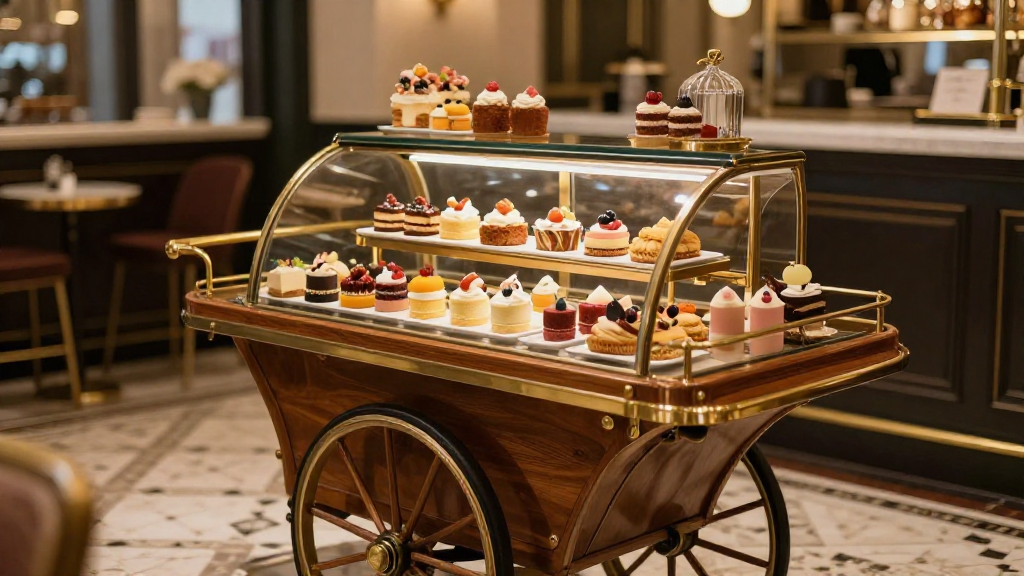
The history of dessert carts is a fascinating journey through time, reflecting cultural changes, culinary innovations, and the evolution of dining experiences.
What Are Dessert Carts?
Dessert carts, or dessert trolleys, are mobile serving platforms often used in restaurants and events to display and serve a variety of sweet treats.
These carts typically feature an array of desserts, including cakes, pastries, and a selection of confections.
Restaurant patrons can browse the offerings and select their preferred sweets right at the table.
Over time, the concept of dessert carts has evolved significantly, influenced by social customs and culinary traditions.
How Did Dessert Carts Begin?
The history of dessert carts can be traced back to Europe in the 18th century, during a time when fine dining began to flourish.
Key factors contributing to their origin include:
- The rise of luxury dining experiences.
- The importance of presentation in culinary arts.
- The growing public interest in elaborate desserts.
Initially, these carts were often part of formal dining rooms in upscale establishments.
They were decorated extravagantly and served as a centerpiece for desserts.
The goal was to enhance the dining experience, allowing guests to engage with the dessert selection directly.
What Influence Did France Have on Dessert Carts?
France played a pivotal role in the development and refinement of dessert carts.
During the French Revolution in the late 18th century, the culinary arts experienced a renaissance.
Notable influences included:
- The introduction of elaborate pastries.
- The establishment of patisseries, showcasing French desserts.
- The innovative use of sugar and confectionery techniques.
French chefs began to create intricate dessert displays, which eventually led to the incorporation of dessert carts in restaurants.
Many signature desserts, such as tarte Tatin and mille-feuille, gained popularity during this era and were frequently featured on dessert carts.
How Did Dessert Carts Spread Worldwide?
The history of dessert carts is not limited to Europe.
As French cuisine spread across the globe, so did the concept of dessert carts.
Here are some notable points in their international journey:
- 20th Century America: The rise of diners and upscale restaurants in the U.S. embraced dessert carts as part of the dining experience. Popularity surged in the 1950s and 1960s, especially in fine dining venues.
- Asian Influence: In countries like Japan and China, dessert carts evolved into sushi trolleys or dim sum carts, showcasing local delicacies and modern desserts.
- Cultural Fusion: In multicultural societies, dessert carts have blended various traditions, such as Middle Eastern sweets, Latin pastries, and American favorites.
This global adaptation has led to a diverse array of desserts served on carts, reflecting different culinary heritages.
Why Are Dessert Carts Still Popular Today?
Despite the advent of modern dining practices and technology, dessert carts continue to be popular in many upscale restaurants and social events.
Here are a few reasons for their enduring appeal:
-
Interactive Experience:
– Dessert carts offer a unique interactive dining experience, allowing guests to participate in their dessert selection. -
Visual Appeal:
– A beautifully arranged dessert cart can be a feast for the eyes, enhancing the overall dining atmosphere. -
Variety:
– Dessert carts can hold a wide range of options, catering to different tastes and dietary restrictions, making it easy for diners to find something they love. -
Nostalgia:
– There’s a sense of nostalgia associated with dessert carts, evoking memories of classic dining experiences from a bygone era.
Many restaurants invest in beautiful, handcrafted carts to make the presentation as enticing as the desserts themselves.
What Are the Different Types of Dessert Carts?
While the history of dessert carts remains rooted in tradition, today’s dessert carts come in various styles and themes.
Some common types include:
- Classic Dessert Carts:
-
These often feature traditional desserts such as cakes, pies, and pastries. They are usually elegantly designed to match the restaurant’s ambiance.
-
Themed Dessert Carts:
-
These carts are adapted for special events or holidays, showcasing desserts that fit a particular theme (e.g., Halloween treats, Christmas sweets).
-
Gourmet Dessert Carts:
-
Often found in fine dining establishments, these carts feature high-end, chef-driven desserts, often made with premium ingredients.
-
Tasting Car:
- This type offers a variety of small taste portions, allowing diners to sample multiple desserts without committing to a full serving.
These diverse styles reflect the continuing innovation and creativity in the culinary world.
What Are Some Famous Desserts Found on Dessert Carts?
The history of dessert carts is rich with classic and modern desserts that have become favorites among diners.
Here are some iconic desserts commonly found on dessert carts:
- Tiramisu:
-
An Italian classic made with coffee-soaked ladyfingers and mascarpone cheese, garnished with cocoa powder.
-
Chocolate Fondant:
-
A popular choice with its molten chocolate center, often served with ice cream.
-
Crème brûlée:
-
A custard dessert topped with a layer of caramelized sugar, beloved for its rich flavor and crunchy texture.
-
Cheesecake:
-
Variations of cheesecake, from fruity to chocolatey, make it a versatile option on dessert carts.
-
Macarons:
- These delicate French cookies add color and elegance to any dessert cart.
Each of these desserts has its own backstory, adding depth to the overall history of dessert carts.
In Conclusion
The history of dessert carts is not just about sweet treats; it’s about the evolution of the dining experience and cultural exchange.
From their origins in 18th-century France to their modern-day adaptations across the globe, dessert carts continue to delight both diners and chefs alike.
As culinary traditions evolve, so too will the desserts and the carts that carry them.
Whether enjoyed in a fine dining restaurant or at a lavish event, dessert carts remain a timeless symbol of indulgence and creativity in gastronomy.
With a rich blend of tradition, innovative flair, and a focus on the guest experience, dessert carts are sure to continue their journey through culinary history for years to come.