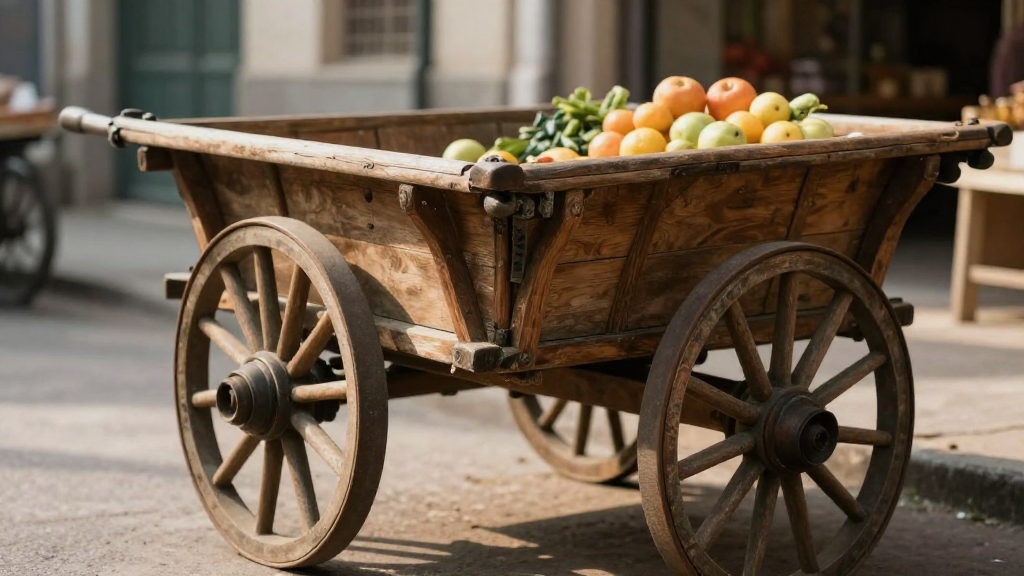
The history of pushcarts traces back thousands of years and reveals the evolution of human ingenuity in transportation and trade.
Understanding this evolution involves exploring various cultures and time periods.
What Are Pushcarts?
Pushcarts are simple, wheeled carts pushed by hand, traditionally used for transporting goods.
They come in many forms:
- Hand-drawn carts
- Market stalls on wheels
- Snack stands
Today, you might encounter pushcarts in bustling city streets, filled with everything from hot dogs to fresh fruit.
How Did Pushcarts Originate?
The history of pushcarts dates back to ancient civilizations.
Evidence suggests that the earliest forms of pushcarts were used in Mesopotamia around 3000 BCE.
These early carts were made from wood and had two or four wheels, making them ideal for transporting grains and agricultural products.
Notably, the Egyptians also employed similar wheeled carts.
They utilized them for transporting building materials, like limestone for monumental constructions such as the pyramids.
How Were Pushcarts Used in Ancient Societies?
Throughout ancient history, pushcarts served various essential functions:
-
Transportation of Goods: Merchants used pushcarts to move their wares from one location to another.
-
Trade and Barter: Local markets thrived with vendors utilizing pushcarts for trade, fostering early economic systems.
-
Military Supply: Ancient armies used pushcarts to transport supplies and equipment, benefiting from their mobility.
What Innovations Improved Pushcart Design?
As societies evolved, so did the design and functionality of pushcarts.
Materials and innovation played significant roles in their development:
-
Wheels: The introduction of stronger, lighter materials, such as metal and improved wood, enhanced wheel durability.
-
Design: More sophisticated designs came about, including collapsible models for easier storage and transport.
-
Customization: Pushcarts were tailored for specific trades, such as ice cream vendors using insulated carts.
How Did Pushcarts Make Their Way Around the World?
The history of pushcarts is a testament to cultural exchange and adaptation.
In the Middle Ages, European cities saw increased pushcart usage for local trade.
As people migrated and traded, they carried their pushcart traditions with them, leading to variations around the globe.
In Asia, for example, you can find unique designs such as the Rickshaw, which evolved from simple hand-pulled carts to motorized versions in urban areas.
What Role Did Pushcarts Play in Urban Environments?
As societies became more urbanized, pushcarts became synonymous with city life.
In the 19th century, pushcarts became critical for street vending.
Cities like New York and Paris were transformed with rows of pushcarts selling everything from pretzels to flowers.
Pushcarts offered:
-
Accessibility: They allowed entrepreneurs to start businesses with minimal startup costs.
-
Job Opportunities: Many immigrants found work as vendors, using pushcarts to support their families.
-
Culinary Diversity: Pushcarts introduced a variety of foods and cuisines, enriching urban culture.
How Are Pushcarts Relevant Today?
While the history of pushcarts spans centuries, their relevance continues today.
Modern pushcarts have evolved to meet contemporary demands:
-
Food Trucks: A popular incarnation, food trucks maintain the essence of pushcarts while offering gourmet options.
-
Ecological Impact: Many pushcart owners champion sustainability, using their carts to promote local and organic products.
-
Cultural Events: Pushcarts across various cities serve as staples at festivals and fairs, preserving the tradition of food and culture sharing.
What Future Innovations Could We Expect?
Given the shift towards sustainability and technology, the future of pushcarts may incorporate:
-
Solar Power: Using solar panels to power refrigeration units for perishables.
-
Smart Technology: Incorporating apps for tracking inventory and sales in real time.
-
Eco-friendly Materials: Building pushcarts from biodegradable or recyclable materials.
Conclusion: The Significance of the History of Pushcarts
The history of pushcarts encapsulates a rich tapestry of human activity, adaptability, and cultural exchange.
From ancient Mesopotamia to modern urban streets, pushcarts have enabled trade, fostered community, and provided livelihoods.
As society continues to innovate, this humble transport mechanism will undoubtedly evolve, serving future generations while honoring its storied past.
In conclusion, whether you spot a street vendor selling the latest food fad or a market stall from a local farmer, remember that these pushcarts are not just tools; they are part of a historical narrative that bridges past and present.
Engaging with this vibrant aspect of commerce not only nourishes our bodies but also connects us to the rich history of pushcarts and the people who have brought goods to our tables over millennia.